A US Air Force colonel survived nearly 50 hours in mountainous terrain behind Iranian lines after his F-15E fighter jet was shot down during a mission in April, before being rescued in a large-scale operation involving US military and intelligence personnel, according to CBS News’ “60 Minutes”.
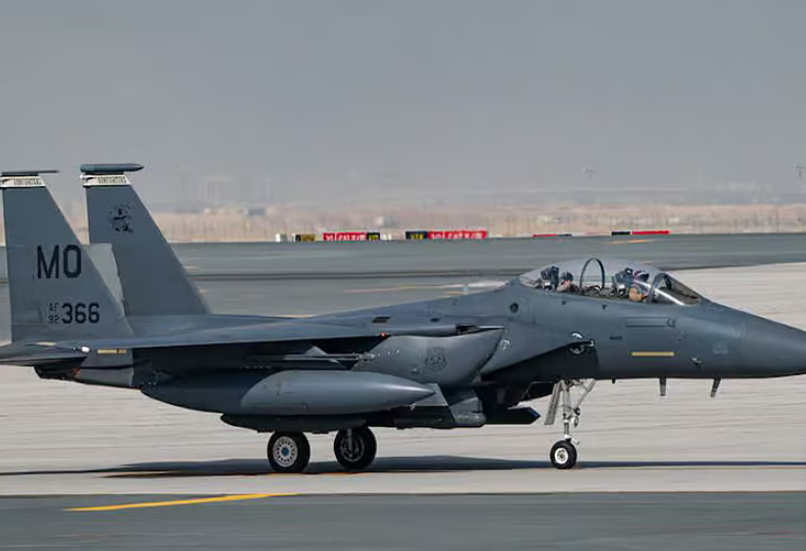
The officer, identified by his mission call sign “Bravo” because of security concerns, was the weapons-systems officer aboard the two-seat fighter jet. The aircraft, operating under the mission call sign “Dude 44”, was reportedly hit by an Iranian shoulder-fired missile on April 2 during a mission near Isfahan.
According to CBS News, the aircraft was conducting a strike against industrial facilities associated with Iran’s drone and missile programmes. Bravo and the pilot, known as “Alpha”, ejected after the aircraft was hit but became separated during their descent.
Bravo’s parachute was damaged, causing him to fall at an estimated 70 to 100 miles per hour before landing in a mountainous desert area. He suffered a broken back, arm and shoulder.
“At one point when I looked up and saw no parachute, that was the most terrifying thing I’ve ever seen,” Bravo told “60 Minutes” in his first public account of the incident.
He said he then prayed for help and moved away from the crash site despite his injuries. He eventually reached a ridgeline about 7,000 feet high and concealed himself in the surrounding terrain.
Alpha was rescued during a US operation several hours after the aircraft went down, but rescuers were unable to find Bravo and withdrew.
US War Secretary Pete Hegseth was informed of the incident and ordered preparations to locate the missing airman. “Whether they’re alive or not, we’re going to go get them,” he said, according to CBS News.
The search became increasingly urgent as Iranian forces also moved through the area. Gen. Dan Caine, chairman of the US Joint Chiefs of Staff, said Iranian ground forces came within several hundred metres of Bravo.
Bravo eventually established communication with US forces and indicated that he was injured but still moving. CBS News reported that the CIA used intelligence capabilities and a deception operation to help determine his location.
The US military also conducted strikes against Iranian Revolutionary Guard forces near the area before deploying another rescue team. More than 90 US service members were reportedly sent to the ground, while hundreds supported the mission from the air and thousands more provided assistance.
Rescuers used search-and-rescue aircraft and helicopters to reach Bravo in the difficult mountainous terrain.
The operation encountered another setback when two US aircraft became stuck in sand after landing on a makeshift desert airstrip. The military later destroyed the stranded aircraft and helicopters to prevent sensitive equipment from being captured.
Bravo was finally evacuated from Iran around sunrise on Easter Sunday, nearly 50 hours after the jet was shot down.
President Donald Trump had described the rescue on April 5 as one of the most daring search-and-rescue operations in US history.
Bravo said the mission demonstrated the importance of teamwork, training, faith, decision-making and leadership, as well as the US commitment to bringing its personnel home.