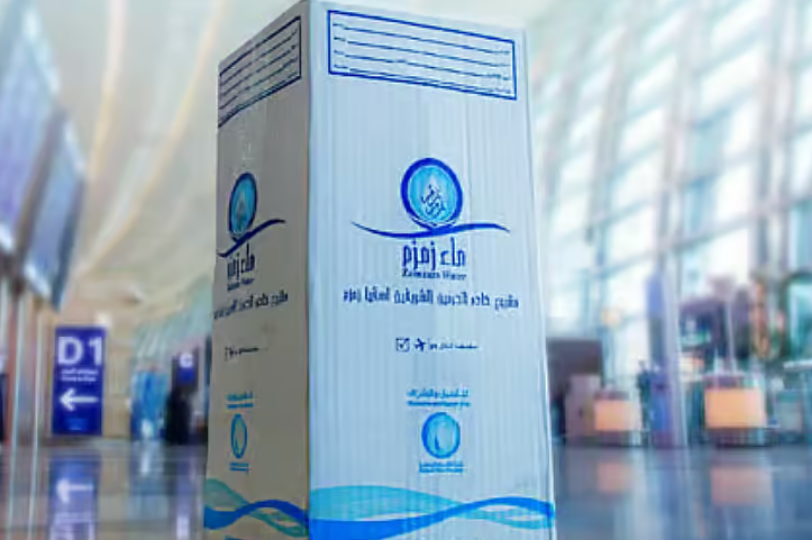
A Saudi customs committee has fined a man SR3,800 after finding him guilty of attempting to smuggle 380 litres of Zamzam water out of the Kingdom, with the water concealed in his vehicle’s boot.
The man was stopped at the King Fahd Causeway customs checkpoint in the Eastern Province, where inspectors discovered the undeclared water during a search of his vehicle, according to a ruling issued by the Second Preliminary Customs Committee in Riyadh.
The committee determined that the water was among the goods restricted from export under Saudi regulations. It ruled that concealing the items and failing to declare them amounted to customs smuggling.
The penalty includes a fine of SR3,800, equivalent to the value of the seized water, while the committee also ordered the confiscation of the entire quantity.
The public prosecution had requested a prison sentence in addition to a financial penalty and confiscation of the goods. However, the committee rejected the request for imprisonment, citing the defendant’s lack of previous criminal convictions.
It considered the fine and confiscation sufficient penalties in the circumstances of the case.
The ruling was issued under Articles 142, 144 and 145 of the Unified Customs Law of the Gulf Cooperation Council States. These provisions define customs smuggling and establish penalties for offences involving the unauthorised movement of goods across borders.
The case highlights the restrictions governing the export of certain goods from Saudi Arabia and the role of customs authorities in enforcing regulations at border crossings.
Zamzam water, drawn from the well in the Grand Mosque in Makkah, holds religious significance for Muslims and is commonly taken home by pilgrims and visitors. However, the quantity involved in this case was treated by the committee as restricted export goods under the applicable customs rules.
The decision distinguishes between the financial and confiscation penalties imposed in the case and the prison term sought by prosecutors, which the committee decided was not necessary given the defendant’s record.