Stock markets in the United Arab Emirates opened sharply lower on Monday morning as investors reacted to rising regional tensions following reports of drone activity linked to Iran and renewed uncertainty surrounding shipping security in the Strait of Hormuz.
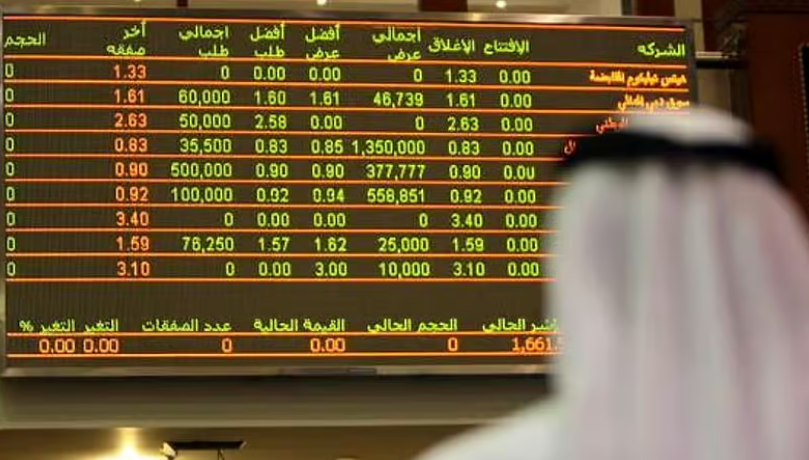
The Dubai Financial Market dropped 1.17 per cent in early trade to 5,639.7 points, with most listed shares trading in negative territory at the start of the week.
Among the biggest decliners on the Dubai exchange were Amlak Finance, Tecom Group, Takaful Emarat, Shuaa Capital, Emaar Properties and Dubai Investments. Market sentiment weakened after the UAE announced on Sunday that it had intercepted two Iranian drones, while a third reportedly struck near the Barakah nuclear power facility.
Only a limited number of stocks posted gains during the opening session. National Industries Group Holding and Dubai Electricity and Water Authority, commonly known as DEWA, traded slightly higher despite the broader sell-off.
The Abu Dhabi Securities Exchange also recorded losses, falling 1.17 per cent to 9,559 points. Insurance House led the declines with a drop of 4.66 per cent, followed by 2PointZero, which fell 3.96 per cent, and Burjeel Holdings, down 3.8 per cent.
A small group of shares managed to remain positive in Abu Dhabi trading, including Investcorp Capital, Agility and Gulf Medical Projects Company.
Investors appeared increasingly concerned about the impact of regional instability on energy markets, shipping routes and broader economic activity. The latest tensions come as ceasefire discussions linked to Iran remain uncertain and maritime security concerns continue around the Strait of Hormuz, a key global oil shipping route.
Additional pressure on market sentiment followed comments from Donald Trump and Iranian Foreign Minister Abbas Araghchi on Sunday. Trump said the United States was losing patience with Tehran and stated that he had agreed with Chinese President Xi Jinping that Iran must not be allowed to obtain nuclear weapons and should reopen the Strait of Hormuz.
Analysts said investors were closely watching developments in the Gulf, particularly any threat to oil exports or commercial shipping traffic, both of which are critical to regional economies and global energy supplies.
The UAE markets had shown relative resilience in recent months despite wider geopolitical pressures, supported by strong corporate earnings and continued economic growth. However, traders said Monday’s declines reflected growing caution as uncertainty surrounding the regional security situation intensified.
Financial markets across the Gulf are expected to remain sensitive to further political and military developments in the coming days.