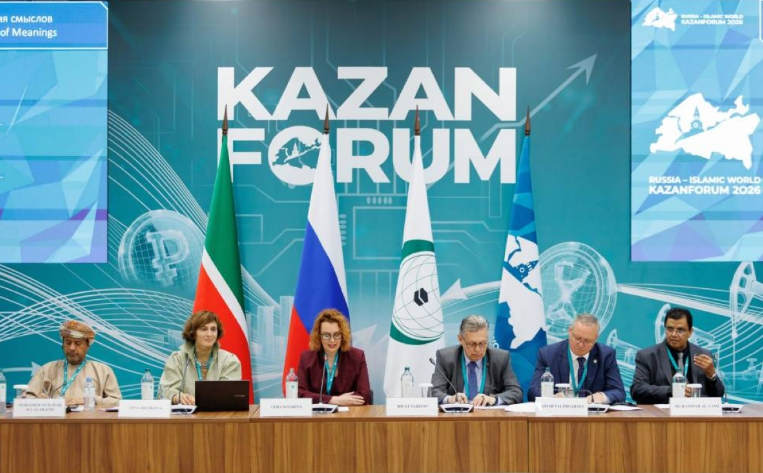
Media leaders, journalists and communication specialists from across the Islamic world gathered at the XVII Russia–Islamic World: Kazan Forum to examine the growing impact of artificial intelligence, deepfakes and digital misinformation on global journalism.
The media forum, held under the theme “Heritage Code: The Digital Evolution of Meanings,” focused on how emerging technologies can help preserve cultural and spiritual heritage while also protecting the credibility of information in an increasingly digital world.
Opening the discussions, Marat Gatin stressed the need for responsible use of technology in media and communications. Gatin, who also serves as deputy chairman of the Russia–Islamic World Strategic Vision Group, said modern technological progress should support efforts to safeguard cultural identity and historical memory.
He noted that cooperation between Russian media organisations and countries across the Islamic world continues to expand, describing the Kazan Forum as an important platform for discussing new communication tools and media technologies.
Aidar Salimgaraev said changing audience habits are forcing media organisations to rethink traditional formats and adapt to rapidly shifting trends without losing their national and cultural identity.
Salimgaraev said around 400 journalists from 29 countries attended this year’s forum, highlighting what he described as growing international interest in the event.
A major focus of the discussions was the rise of artificial intelligence in journalism and the risks posed by manipulated content and false information online.
Tarek Ladjal, head of the Information Department at the Organization of Islamic Cooperation, warned that deepfakes and digital disinformation are becoming increasingly sophisticated.
“We are not just fighting against fakes, but we advocate for the integrity of information,” Ladjal told participants. He said many countries in the Islamic world remain concerned about protecting their history, values and digital sovereignty from online manipulation.
Ladjal called for stronger media literacy programmes and urged journalists to improve their understanding of artificial intelligence systems and large data platforms. He also stressed the need for international cooperation to counter what he described as “digital vandalism,” while maintaining a human-centred approach to journalism.
Muhammad Al-Yami, director-general of the Union of News Agencies of the OIC, described Kazan as a fitting venue for discussions on heritage and technology because of its cultural and historical significance.
Al-Yami highlighted ongoing efforts to integrate AI tools into media work, including the launch of the “Smart Editor” programme designed to assist content production and journalist training across OIC member states.
Participants at the forum also discussed proposals to hold regular meetings for media leaders from OIC countries, establish a Global South journalists’ network, and develop ethical guidelines governing the use of artificial intelligence in journalism.