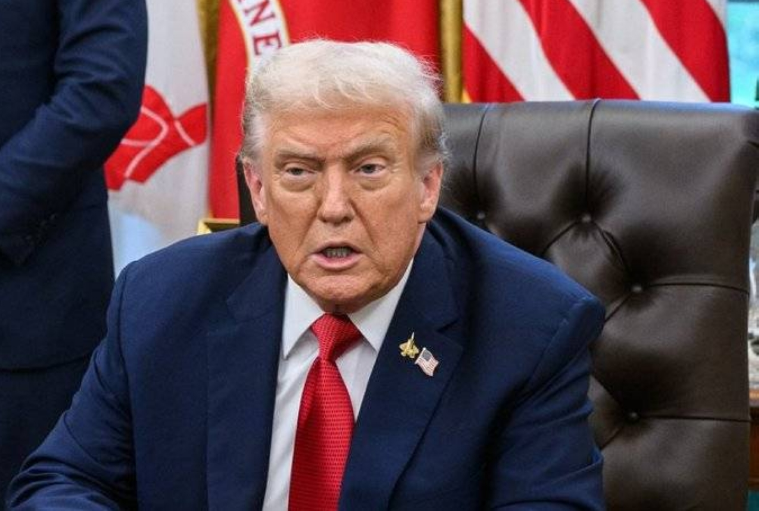
US President Donald Trump announced late Tuesday a two-week suspension of military action against Iran, signalling a possible shift toward diplomacy after weeks of escalating conflict in the region.
Writing on Truth Social, Trump said the pause in hostilities would be conditional on Iran agreeing to reopen the Strait of Hormuz, a critical route for global energy shipments. “Based on conversations with Prime Minister Muhammad Shehbaz Sharif and Field Marshal Asim Munir of Pakistan, who requested that I hold off on sending destructive force to Iran tonight, I agree to suspend the bombing and attacks on Iran for a period of two weeks,” Trump stated. “This will be a double-sided ceasefire.”
The announcement follows increasing international concern over the impact of the conflict on regional stability and global markets. The Strait of Hormuz, through which a significant share of the world’s oil supply passes, has remained a focal point, with disruptions contributing to rising energy prices and economic uncertainty.
Trump said the United States had already “met and exceeded all military objectives” and suggested that a broader agreement could be within reach. He described a 10-point proposal received from Tehran as a “workable basis for negotiation,” indicating that many of the key issues that had stalled previous talks may have been addressed.
The move comes after Pakistan intensified diplomatic efforts to de-escalate tensions. Earlier on Tuesday, Prime Minister Shehbaz Sharif publicly urged Washington to extend its deadline for Iran to reach an agreement. He also called on Tehran to reopen the Strait of Hormuz as a goodwill gesture to prevent further escalation.
Officials in Islamabad have positioned Pakistan as a mediator between the two sides, engaging in discussions aimed at encouraging dialogue and reducing the risk of a wider conflict. Analysts say the two-week pause provides a limited but important opportunity for both countries to negotiate terms for a more lasting settlement.
While the ceasefire is conditional, it represents a notable shift from the recent pattern of military escalation. Observers caution that the situation remains fragile, with the outcome dependent on Iran’s response and the willingness of both sides to engage constructively in negotiations.
Diplomatic channels are expected to remain active during the suspension period, with potential talks focusing on reopening key trade routes, easing tensions, and establishing mechanisms to avoid further confrontation.
The coming days are likely to determine whether the temporary halt in fighting can lead to a longer-term agreement or whether hostilities will resume if conditions are not met. For now, the announcement has raised cautious hopes that diplomacy may take precedence over conflict in shaping the next phase of the crisis.