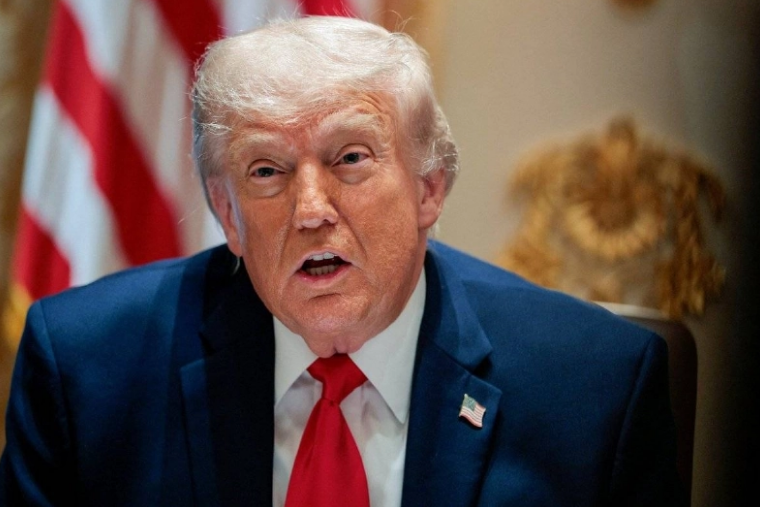
US President Donald Trump has announced what he described as the “most crushing economic operation” ever imposed on a country, warning that governments and businesses that continue supporting Iran could face severe economic consequences.
In a post on Truth Social, Trump said the United States would pursue economic warfare and unprecedented isolation against Tehran after he said Iran had failed to reach a deal with Washington.
Trump warned that any country allowing its financial institutions, businesses, airports or government bodies to provide Iran with what he called a “lifeline” would face major economic consequences.
He called on US allies to support the campaign and urged authorities to target activities including oil smuggling, barter arrangements, cash transfers, currency exchange businesses, shipping registries and front companies.
Trump described the planned measures as an “economic D-Day”, presenting the campaign as an effort to isolate Tehran and increase pressure on its economy. He did not provide a detailed timetable for introducing individual measures.
The announcement comes as efforts to reach a wider agreement between Washington and Tehran remain stalled. Trump said previously that no talks were taking place and maintained that the US naval blockade remained in effect.
He has also insisted that the Strait of Hormuz is open and operating normally, while Iran has maintained that the strategically important waterway remains closed to shipping.
The conflicting claims have contributed to uncertainty around energy markets and maritime trade. The Strait of Hormuz is a critical route for global oil and gas shipments, and disruptions there have already affected tanker movements and pushed crude prices higher.
Trump also said that naval mines in the waterway had either been removed or detonated. His administration has continued to emphasise its ability to maintain shipping through the strait despite security concerns.
Iran has rejected Washington’s pressure campaign. Iranian Foreign Minister Abbas Araqchi described the latest US economic initiative as a diversion from American economic problems and said it would not force Tehran into surrender.
The dispute has also affected regional countries. The United Arab Emirates recently suspended trade and financial dealings with Iran after reporting missile incidents involving maritime traffic, while Tehran rejected the allegations.
The latest US announcement marks a further escalation in the confrontation with Iran, shifting attention toward financial and commercial pressure after months of military and diplomatic tension.
Businesses, banks and governments trading with Iran now face greater uncertainty over possible US sanctions, particularly if Washington moves to punish third parties accused of helping Tehran maintain access to international markets.
The impact of the campaign will depend on how extensively the United States applies the threatened measures and whether other countries cooperate with Washington’s effort to isolate Iran.