The US Congress has approved funding for most of the Department of Homeland Security (DHS), bringing an end to a record 75-day partial shutdown that disrupted several key federal agencies and left thousands of workers in limbo.
The House of Representatives passed the funding measure on Thursday, following Senate approval earlier. The legislation now heads to President Donald Trump, who is expected to sign it into law. It will finance much of the department through the end of the current fiscal year on September 30.
The bill restores full operations at major DHS agencies, including the Federal Emergency Management Agency, the Coast Guard, the Transportation Security Administration (TSA), and the Secret Service. These agencies had been operating under severe financial strain since the shutdown began on February 14.
However, the legislation does not provide new funding for Immigration and Customs Enforcement (ICE) or US Border Patrol, the two agencies at the centre of the political dispute that triggered the impasse. Their funding will instead be addressed separately, leaving the broader debate over immigration enforcement unresolved.
The House cleared the bill by voice vote just hours before a critical deadline. Homeland Security Secretary Markwayne Mullin had warned lawmakers that emergency funds being used to pay employees were nearly exhausted.
Democrats welcomed the move, while criticising Republican leaders for delaying action. Senator Patty Murray said the House had waited weeks to pass a measure the Senate had already approved unanimously. She argued that the delay unnecessarily prolonged uncertainty for workers and jeopardised essential services.
The standoff began when Democrats sought new restrictions on immigration enforcement practices, including limits on raids in sensitive locations and the use of face coverings by officers. Republicans rejected those conditions, insisting that immigration agencies should receive full funding without additional constraints.
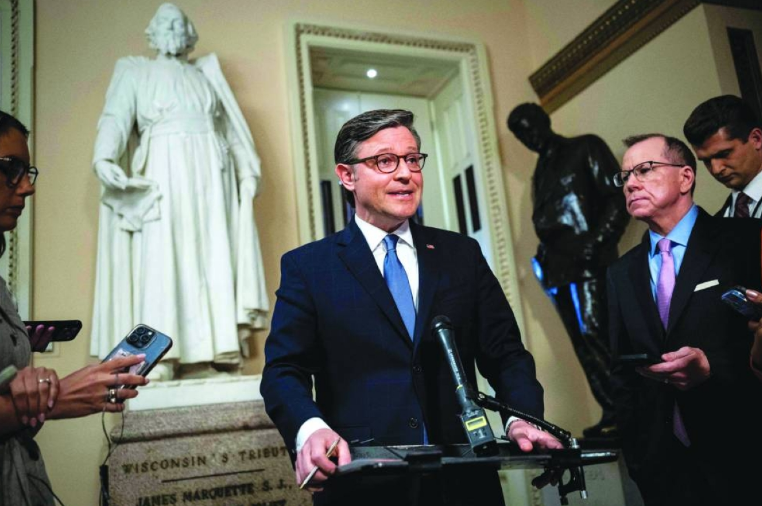
House Speaker Mike Johnson had initially resisted bringing the Senate compromise to a vote, arguing that it did not adequately address border security. But pressure from the White House, moderate Republicans, and agency officials eventually forced a shift.
The shutdown had significant operational consequences. Thousands of DHS employees worked without pay, while more than 1,000 TSA officers reportedly left their jobs during the funding lapse. Planning for major events, including matches tied to the upcoming FIFA World Cup, also faced disruption.
Republicans are now expected to pursue separate legislation that could provide up to $70 billion for immigration enforcement agencies through the budget reconciliation process, which would allow them to bypass Democratic opposition in the Senate.
While the immediate crisis has been resolved, the fight over immigration funding remains far from settled. With Congress heading into recess, attention will soon turn to whether lawmakers can avoid another funding clash later this year.