India has reduced excise duties on petrol and diesel in an effort to shield consumers from rising fuel costs and contain inflation, as global oil prices climb בעקבות disruptions linked to the Iran war. At the same time, the government has introduced windfall taxes on aviation fuel and diesel exports to secure domestic supply.
In an order issued late Thursday, the finance ministry cut the special excise duty on petrol to 3 rupees per litre from 13 rupees, while the duty on diesel was reduced to zero from 10 rupees per litre. The decision comes as crude oil prices surge past $100 per barrel following the near closure of the Strait of Hormuz, a critical route that handles about 40% of India’s crude imports.
Officials did not provide an estimate of the revenue impact, though economists warned the move would weigh heavily on government finances. Madhavi Arora of Emkay Global estimated the annual fiscal cost could reach around 1.55 trillion rupees. She said the tax cuts would offset between 30% and 40% of the losses currently faced by oil marketing companies due to elevated global prices.
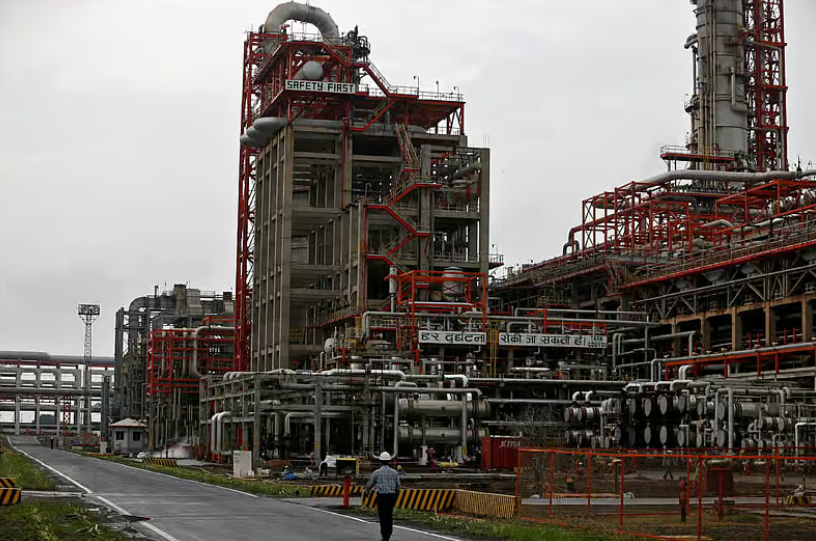
Oil Minister Hardeep Singh Puri said the government had absorbed a significant reduction in tax revenues to ease the burden on consumers and limit losses for fuel retailers. According to his statement, oil companies are facing losses of roughly 24 rupees per litre on petrol and 30 rupees per litre on diesel at current international prices.
Financial markets reacted swiftly. The yield on India’s 10-year government bond rose by 7 basis points to 6.95%, its highest level in nearly 20 months, reflecting concerns about the fiscal outlook. Shares in major state-run refiners, including Bharat Petroleum Corporation and Hindustan Petroleum Corporation, initially rose more than 4% before trimming gains later in the session.
Alongside the tax cuts, the government imposed a 21.5 rupees per litre levy on diesel exports and a 29.5 rupees per litre tax on aviation fuel exports. Finance Minister Nirmala Sitharaman said the measures are intended to ensure adequate domestic availability of fuel products amid global uncertainty.
India, the world’s third-largest oil importer and consumer, relies heavily on overseas supplies, with a significant share coming from the Middle East. Between April 2025 and January 2026, the country exported 14 million tonnes of gasoline and 23.6 million tonnes of gasoil. However, most state-run refiners have scaled back exports in recent weeks, leaving private sector giant Reliance Industries as the leading exporter.
The government’s actions come ahead of key regional elections, where rising fuel prices often influence voter sentiment. Officials have also emphasized that arrangements are in place to secure supplies of fertilisers and coal, as demand for energy increases during the summer season.