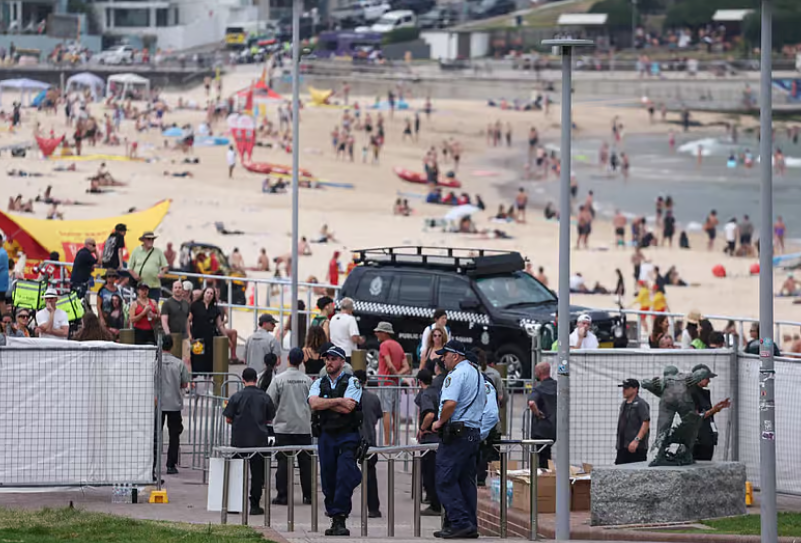
Australia’s capital will join a national gun buyback programme following the deadly shooting at a Jewish festival in Sydney that left 15 people dead, Prime Minister Anthony Albanese said on Saturday.
The Australian Capital Territory, which includes Canberra, has agreed to introduce a firearms buyback scheme as part of wider efforts to reduce the number of guns in circulation and strengthen public safety.
Albanese’s centre-left government introduced legislation in January following the December 14 attack at a Hanukkah celebration at Bondi Beach in Sydney. The measures included plans for a nationwide gun buyback, tighter firearms licensing requirements and stronger action against hate-related offences.
New South Wales, Australia’s most populous state, was the first jurisdiction to commit to the buyback programme. Its scheme is scheduled to begin on November 2.
The ACT government has now agreed to a similar programme, although officials have not yet announced when the Canberra-area buyback will start.
Albanese said the cooperation between the federal and ACT governments was intended to remove firearms from communities and reduce the risk of another attack motivated by antisemitism.
“I thank the ACT Government for their collaboration as we work to take guns off our streets to better protect Australians,” Albanese said in a statement.
The ACT currently has about 23,000 firearms and more than 7,000 licensed firearm holders, according to the government.
The decision follows an investigation into the Bondi Beach attack, in which police allege that a father and son carried out the shooting after being inspired by Daesh. Authorities have said the firearms used in the attack were legally obtained.
The surviving suspect has not yet entered pleas to multiple charges, including 15 counts of murder.
The December attack renewed debate in Australia over access to firearms and whether existing regulations provide sufficient protection against mass shootings. The government has argued that reducing the number of privately held firearms, improving background checks and strengthening licensing rules can help reduce future risks.
Australia had about 4.1 million firearms in circulation last year, according to government figures.
The new programme is expected to become the country’s largest gun buyback since the national campaign launched after the 1996 Port Arthur massacre in Tasmania. A gunman killed 35 people in that attack, prompting Australia to introduce sweeping firearm restrictions and a major weapons buyback.
The latest measures come nearly three decades after those reforms and are intended to address new security concerns while maintaining strict controls on civilian gun ownership.
Authorities in the ACT are expected to provide further details about the scheme, including its start date and the process for firearm owners to surrender weapons.
The federal government has described the buyback as part of a broader response aimed at preventing future mass shootings and protecting communities from gun violence.