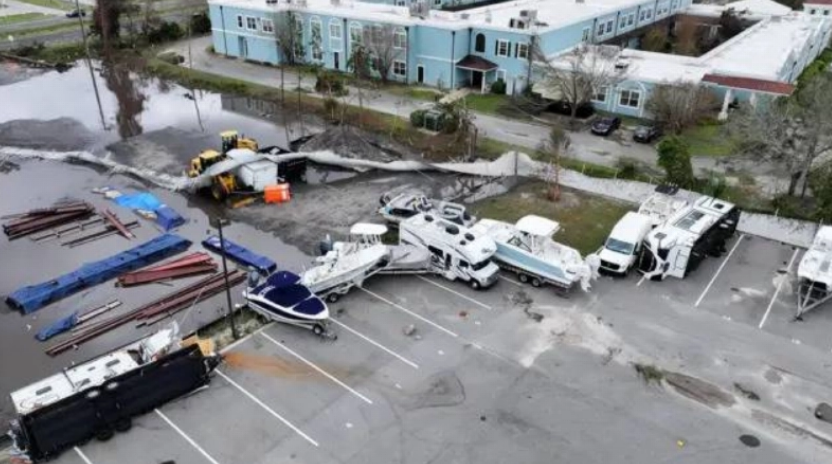
Hurricane Isaias killed at least four people and left more than 600,000 homes and facilities without electricity after bringing heavy rain and powerful winds to the southern United States, according to reports.
The US National Hurricane Center said the storm weakened on Saturday from a hurricane to a tropical or post-tropical storm after making landfall in Florida. Despite losing strength, the system continued to pose risks from heavy rainfall, strong winds and dangerous coastal conditions.
Several states along the Gulf of Mexico, including Florida and Alabama, declared states of emergency as authorities prepared for the storm’s effects. Evacuations were ordered in areas facing the threat of gale-force winds, high waves and flooding caused by intense rainfall.
Wind speeds reached 165 kilometres per hour before the storm was downgraded, highlighting the strength of the system as it moved across the region. Emergency services faced the challenge of responding to reported deaths, power disruptions and weather-related damage while conditions remained hazardous.
The storm also disrupted energy production in the Gulf of Mexico, a major source of US oil and natural gas supplies. Approximately 63 per cent of oil production and 57 per cent of gas production in the area was suspended as a precaution against dangerous weather conditions.
The shutdown removed an estimated 1.3 million barrels of oil per day from the market, raising concerns about short-term supply disruptions as offshore operations were halted.
In response, the US Department of Energy announced plans to release up to four million barrels of crude oil from the Strategic Petroleum Reserve. The move was intended to help address potential supply shortages caused by the storm-related interruption to production.
The reserve serves as an emergency source of crude oil that the US government can draw on during significant disruptions to energy supplies. Releasing oil from the stockpile can help provide additional supply while producers assess damage and determine when offshore operations can safely resume.
The impact on energy infrastructure added to the wider emergency facing communities across the southern states, where power outages affected hundreds of thousands of customers. Restoration work can be complicated by flooding, damaged infrastructure and continuing strong winds.
Authorities urged residents in threatened areas to follow evacuation orders and remain alert to official weather updates as the storm weakened and moved away from its strongest hurricane conditions.
The full extent of the damage and the time required to restore suspended oil and gas production were not immediately clear. Energy operators typically need to assess offshore facilities and ensure that workers can return safely before restarting operations.
The storm’s effects on electricity supplies, coastal communities and offshore energy production underscored the potential for severe weather to disrupt both daily life and critical infrastructure across the Gulf region.