SpaceX on Thursday called off the launch of its latest Starship rocket moments before liftoff in Texas, delaying a closely watched test flight that is seen as critical to the company’s future plans and investor confidence ahead of a potential record-breaking public listing.
The uncrewed Starship V3 rocket had been scheduled to launch from the company’s Starbase facility in Texas as part of its 12th major test mission. The spacecraft includes a series of upgrades aimed at supporting rapid deployment of Starlink satellites and future lunar missions for NASA.
The launch countdown was halted several times before the mission was ultimately scrubbed just seconds before liftoff because of concerns related to fuel temperature and pressure readings.
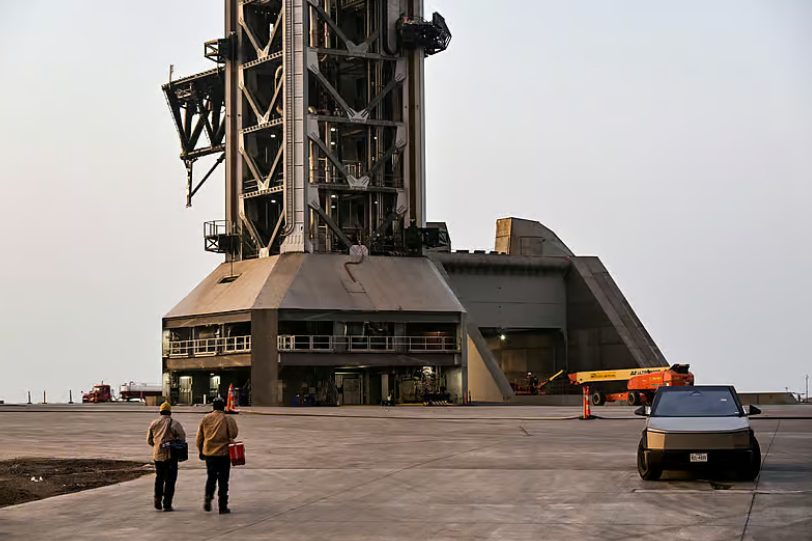
SpaceX founder Elon Musk later said on X that engineers identified a problem with a hydraulic pin attached to one of the launch tower’s large mechanical arms, which failed to retract properly before launch.
“If that can be fixed tonight, there will be another launch attempt tomorrow,” Musk wrote.
The company later announced it was preparing for another launch window on Friday beginning at 5:30 p.m. Central Time.
The latest version of Starship represents the culmination of months of redesign work after a series of setbacks and failed tests last year. SpaceX has invested more than $15 billion into the fully reusable rocket system, which Musk considers central to reducing launch costs and expanding the company’s commercial space operations.
Starship is expected to play a major role in deploying the growing Starlink satellite network and supporting long-term ambitions that include deep-space missions and commercial orbital infrastructure.
The rocket programme has also attracted increased attention from financial markets as reports continue to circulate about a possible public listing of SpaceX. The company is reportedly targeting a valuation of around $1.75 trillion, which would make it one of the largest initial public offerings in history.
Ahead of Thursday’s launch attempt, Musk sought to reassure followers that another setback would not significantly disrupt development timelines.
“There is a large pipeline of V3 ships and boosters in the factory,” he said, adding that even a failed test would likely delay future launches by only about a month.
SpaceX has built its reputation on a rapid development approach that relies heavily on repeated flight testing and engineering adjustments after failures. The company’s strategy differs from the more cautious methods traditionally used across the aerospace industry, with engineers frequently pushing spacecraft systems to their limits during live testing.
The upcoming Starship flight is expected to provide important data for future missions as SpaceX continues work on its next-generation launch system.