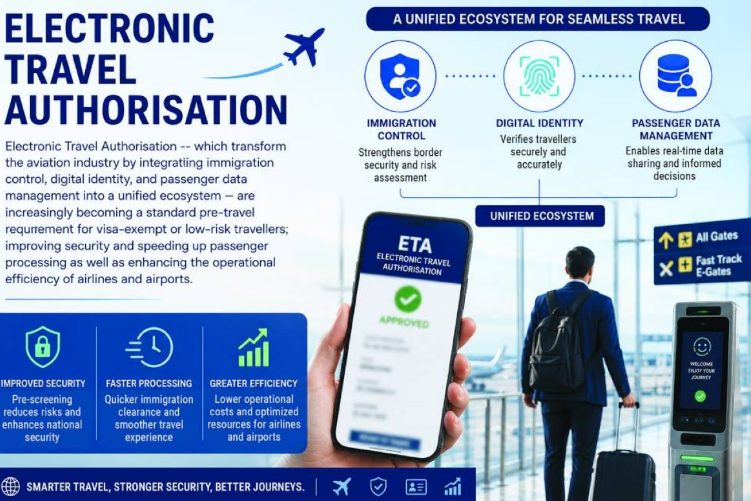
Electronic Travel Authorisations (ETAs) are rapidly transforming from simple border-entry systems into major digital platforms shaping the future of global travel, aviation security and data management.
Originally introduced as tools to screen visa-exempt travellers before departure, ETAs are now playing a wider role in immigration control, digital identity verification and passenger data processing. Governments and airlines are increasingly relying on these systems to strengthen border security while improving operational efficiency at airports.
Countries including Australia, Canada, the United Kingdom and the United States have expanded ETA-style systems as part of broader efforts to modernise border management. Australia pioneered the model in 1996, becoming the first country to introduce an electronic travel authority system. The UK fully implemented its “No Permission, No Travel” policy earlier this year, requiring travellers to secure digital authorisation before boarding flights.
Industry analysts say ETAs are becoming a central component of a more data-driven aviation sector. The systems collect vast amounts of traveller information before departure, allowing authorities to assess risks in advance rather than relying solely on checks at arrival points.
The European Union is preparing to join the trend with the launch of the European Travel Information and Authorisation System (ETIAS), expected to cover 30 Schengen-area countries from late 2026. Qatar and several Gulf countries have already adopted similar frameworks for selected visitors.
Aviation groups argue that digital travel authorisation systems offer significant benefits for airlines and airports. The International Air Transport Association (IATA) estimates that cases involving inadmissible passengers can cost airlines around $25,000 each because of penalties, accommodation, repatriation and legal expenses.
Industry data also suggests that passenger verification issues continue to disrupt flight operations. Airlines recorded delays, rebookings and operational interruptions linked to inadmissible traveller cases during 2025, increasing pressure for more efficient screening systems.
ETA systems are also becoming closely linked to emerging technologies such as biometric verification, artificial intelligence and cloud-based digital identity platforms. The International Civil Aviation Organisation and IATA have both promoted the use of digital travel credentials and interoperable digital identity systems as part of future aviation strategies.
According to the World Travel Data Forum, ETA platforms processed more than 500 million applications globally last year, generating large volumes of structured travel data that governments and businesses can use to analyse mobility patterns, forecast demand and strengthen crisis response planning.
Despite the growing adoption of ETAs, concerns remain over cybersecurity, privacy protection and inconsistent regulations between countries. Different eligibility rules, fees, application procedures and validity periods have created confusion among travellers and added compliance challenges for airlines.
Industry experts have also warned about the rise of unofficial ETA websites and fraudulent online platforms charging excessive fees or stealing personal information from applicants.
As governments continue expanding digital border systems, aviation analysts expect travel to become increasingly contactless, biometric and intelligence-led. Future ETA systems are expected to integrate with eVisas, digital passports and real-time border intelligence networks, creating a more connected global travel environment while raising fresh debates over data governance and surveillance.