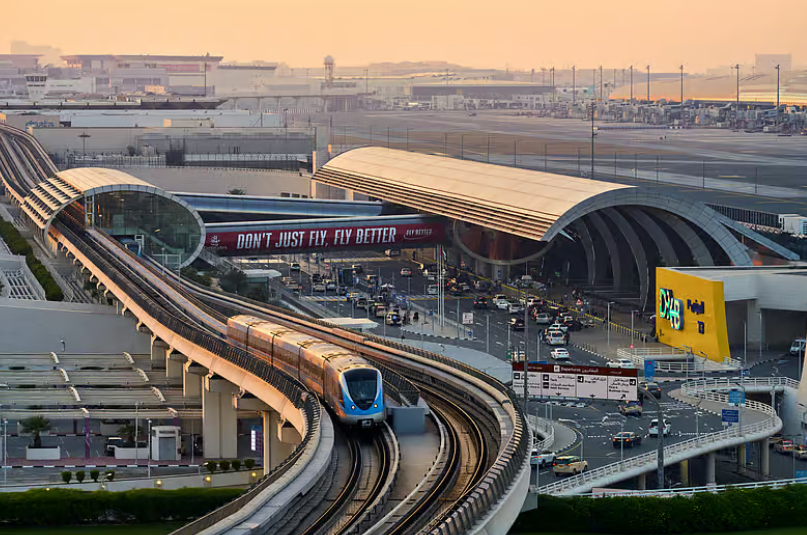
Dubai Airports has begun ramping up flight operations following the full reopening of UAE airspace, marking a key step in the region’s recovery after weeks of disruption linked to the US-Israel-Iran conflict.
In a statement issued after authorities confirmed that air traffic had returned to normal on May 2, the operator said it is “moving decisively to scale up operations,” with a gradual increase in flight movements aligned to available regional air routes.
The UAE had partially closed its airspace on February 28 as a precautionary measure to protect passengers, crews and infrastructure during escalating tensions in the Gulf. With restrictions now lifted, Dubai Airports said it has entered the next phase of recovery, working closely with airlines and neighbouring countries to restore schedules and optimise traffic flows.
Capacity remains tied to the availability of flight paths across the wider region, as coordination continues with adjacent airspaces to ensure smooth operations.
Despite the challenges, Dubai International Airport (DXB) maintained a significant level of activity throughout the crisis. Between February 28 and April 30, the airport handled around six million passengers, more than 32,000 flights and over 213,000 tonnes of essential cargo.
However, the impact on overall traffic was substantial. In the first quarter of 2026, DXB recorded 18.6 million passengers, representing a 20.6 per cent decline compared with the same period last year. March was particularly affected, with passenger numbers dropping 65.7 per cent year-on-year to 2.5 million.
Cargo volumes also fell, reaching nearly 400,000 tonnes in the first quarter, down 22.7 per cent. Aircraft movements totalled 88,000, a decrease of more than 20 per cent, while baggage handling figures reflected the operational strain, with a higher rate of mishandled luggage than usual.
India remained DXB’s largest market during the period, accounting for 2.5 million passengers, followed by Saudi Arabia, the United Kingdom and Pakistan. London was the busiest city destination, ahead of Mumbai and Jeddah.
The disruption unfolded in stages. Following the initial airspace closure in late February, airports across the UAE suspended or reduced operations before gradually resuming limited services in early March. A combination of security concerns and isolated incidents, including a drone-related fire near airport infrastructure, led to intermittent suspensions in the weeks that followed.
By late April, flight activity had begun to stabilise, with UAE carriers operating more than 1,000 daily flights for the first time since the conflict began. The formal lifting of all restrictions on May 2 has now allowed a broader recovery to take shape.
Dubai Airports Chief Executive Paul Griffiths said the emirate’s role as a major global transit hub remains central to the recovery. He noted that a significant share of international transfer traffic passes through the Middle East, with DXB handling a large portion of that demand.
Authorities say efforts are ongoing to increase capacity further in the coming months, supported by long-term expansion plans at Al Maktoum International Airport, as Dubai works to reinforce its position in global aviation.