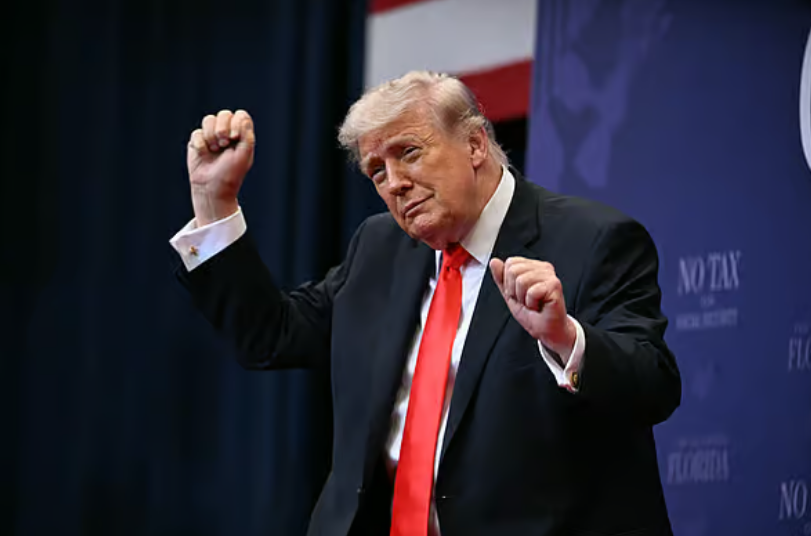
US President Donald Trump has declared that hostilities with Iran have ended, seeking to reinforce his position that he does not need congressional approval to continue military operations if necessary.
In a letter sent to congressional leaders on Friday, Trump stated that the conflict, which began on February 28, had effectively come to an end following a ceasefire. He said there had been no exchange of fire since the truce took effect and described the hostilities as terminated.
The announcement came on the same day the White House faced a key legal deadline under the 1973 War Powers Resolution. The law allows a president to deploy US armed forces for up to 60 days without congressional authorization. After that period, the president must either secure approval from Congress, withdraw forces, or request a limited extension to ensure the safe removal of American troops.
Trump formally notified Congress of the conflict 48 hours after the first airstrikes, setting Friday as the deadline for action under the law.
Speaking before departing Washington for Florida, Trump argued that the ceasefire effectively changed the situation. He has also repeatedly maintained that the War Powers Resolution is unconstitutional, echoing the views of presidents from both major political parties who have long argued that the measure restricts the commander-in-chief’s authority.
Democrats swiftly rejected the administration’s interpretation. They argued that a ceasefire does not suspend the legal requirements of the War Powers Resolution and pointed to the continued presence of US naval forces in the region, including operations enforcing a blockade on Iranian oil exports, as evidence that military involvement remains ongoing.
Senator Jeanne Shaheen, the top Democrat on the Senate Foreign Relations Committee, said the 60-day deadline represented a clear legal obligation. She criticised the administration for failing to present a long-term strategy for ending the conflict.
Trump acknowledged in his letter that tensions with Iran remain unresolved. He warned that Tehran continues to pose a significant threat to the United States and its armed forces.
Meanwhile, Iranian state media reported that Tehran had submitted a new proposal for negotiations through Pakistani mediators. Trump quickly rejected the offer.
The conflict has caused widespread economic disruption, including sharp increases in global energy prices and interruptions to shipping through key oil routes. It has also become politically contentious at home, with public opinion polls showing growing opposition to the war ahead of congressional elections in November.
Republicans, who narrowly control both chambers of Congress, have largely stood behind Trump, blocking efforts by Democrats to force an end to US military involvement.
Legal experts note that while the Constitution grants Congress the sole authority to declare war, presidents have often relied on their executive powers to conduct military operations without formal approval, especially in limited or rapidly evolving conflicts.