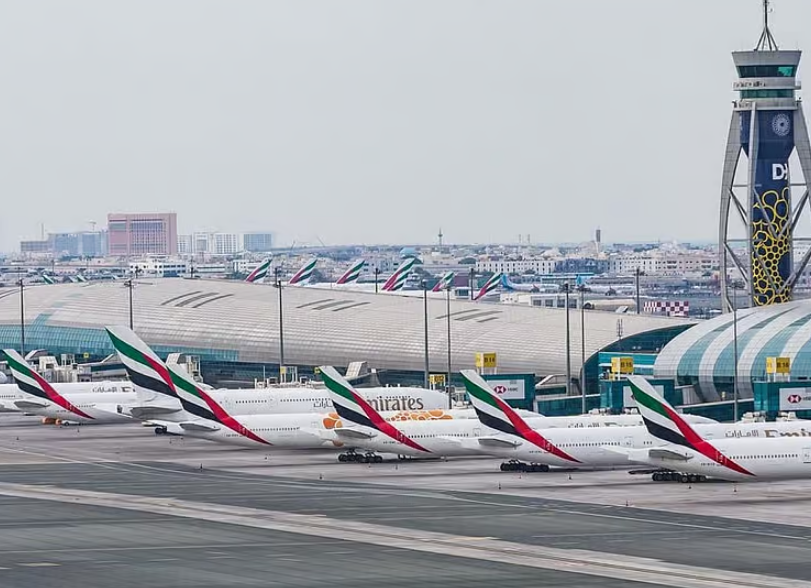
Dubai Airports faced 111 threat alerts and 17 ballistic missile strikes during the regional conflict this year, with most incidents causing limited damage and all injured people now fully recovered, Chief Executive Officer Paul Griffiths said.
Speaking at an international media briefing hosted by the Dubai Media Office on Thursday, Griffiths said the figures demonstrated the resilience of Dubai’s aviation sector during an unusually challenging period.
“The most satisfying statistics: there were zero deaths and very, very limited casualties. I’m very pleased to say that all of those people have now fully recovered,” he said.
Griffiths said most injuries were minor and happened as people moved quickly towards shelters after receiving alerts.
“Most of them were just falling over each other in the early stages when they actually were running too quickly to get to shelter, and we actually managed to calm things down after that to keep everything under control,” he said.
The regional conflict began after US and Israeli attacks on Iran, followed by Iranian drone and missile attacks targeting several Gulf countries, including the UAE. Dubai International Airport was also targeted by Iranian drones during the conflict.
Griffiths credited the UAE government with maintaining communication throughout the crisis, saying this allowed Dubai Airports to respond quickly and take measures to protect passengers and employees.
He also praised the country’s air defence systems and their ability to intercept incoming threats.
“I don’t think any of us felt anything but safe and secure throughout the crisis,” Griffiths said.
The airport chief pointed to Dubai’s previous experience in dealing with major disruptions, including the global financial crisis and the Covid-19 pandemic. He said that experience had helped strengthen the organisation’s ability to respond during periods of uncertainty.
Passenger traffic has also recovered sharply following the disruption.
Griffiths said monthly traffic fell to 2.5 million passengers in March before rising to 5 million in June and 6.3 million in July. The July figure represented a 26% increase from the previous month.
Dubai Airports handled 31.5 million passengers during the first half of the year, Griffiths said. The airport is expected to handle about 70 million passengers by the end of 2026, compared with 95.2 million passengers recorded last year.
Despite the disruption, Griffiths said Dubai Airports remained confident of returning towards its long-term target of 100 million passengers.
He described the recovery as a “trampoline bounce” rather than a “dead cat bounce”, saying passenger traffic had fallen sharply but then rebounded to levels above those seen before the downturn.
“We go down, we hit the trampoline, and then we bounced even higher than before,” Griffiths said.