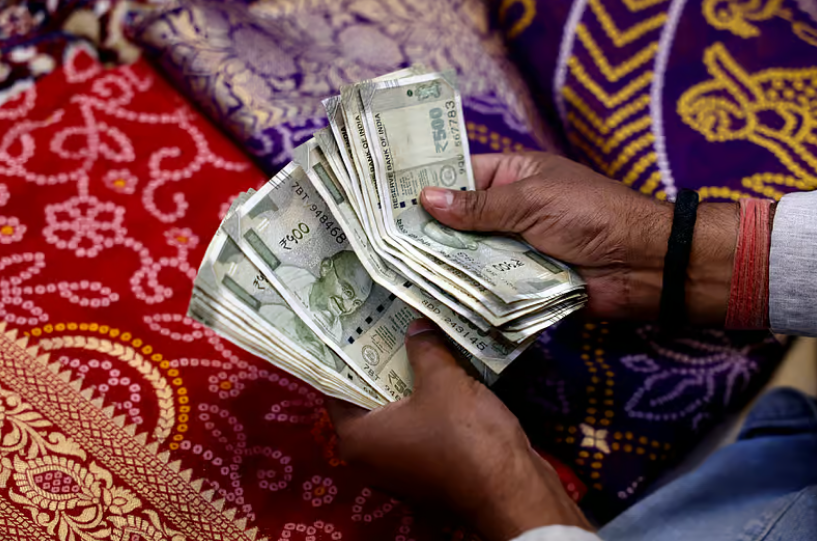
The Indian rupee weakened to another record low on Tuesday as rising oil prices, a stronger US dollar and escalating tensions around the Strait of Hormuz intensified pressure on India’s economy and financial markets.
The rupee opened 18 paise lower at 96.38 against the US dollar in interbank trading after closing at a historic low of 96.20 in the previous session. The decline has pushed the currency close to the 26-rupee mark against the UAE dirham, sharply increasing remittance values for millions of Indian expatriates living in the Gulf.
The currency has now lost nearly 2% over the past seven trading sessions despite repeated interventions by the Reserve Bank of India (RBI), highlighting growing concern among investors over India’s external balances and exposure to higher energy prices.
Analysts said the rupee remains vulnerable because India imports more than 85% of its crude oil needs. Any prolonged disruption in the Strait of Hormuz, a critical shipping route carrying nearly one-fifth of the world’s oil supply, could significantly raise India’s fuel import bill along with shipping and insurance costs.
“The market’s biggest challenge right now is not just direction, but confidence,” said Amit Pabari, managing director of CR Forex Advisors. He added that volatility is likely to remain elevated until geopolitical tensions ease and foreign investment flows stabilise.
The pressure on the rupee has intensified as Brent crude prices continue trading above key levels amid fears of supply disruptions in the Gulf region. At the same time, higher US Treasury yields and a stronger dollar have triggered broader weakness across emerging-market currencies.
For India’s large expatriate population in Gulf countries, particularly the UAE, the weaker rupee has brought short-term financial gains. A dirham transferred home now converts into significantly more rupees than earlier this year, boosting household incomes and savings for families in India.
Currency exchange houses across the UAE reported increased remittance activity in recent days as expatriates rushed to benefit from favourable exchange rates.
Economists, however, warned that sustained weakness in the rupee could create wider economic strain. A cheaper currency raises the cost of imports such as fuel, fertilisers, edible oils and electronics, increasing inflationary pressure across the country.
There are also concerns that prolonged instability in the Gulf could affect employment opportunities for expatriate workers if regional industries such as aviation, construction and trade slow due to higher energy and logistics costs.
India’s balance of payments position is also under mounting stress. HSBC economists have forecast a balance of payments deficit of around $65 billion for the fiscal year ending April 2027, driven by higher import costs and weaker capital inflows.
Foreign investors have sold more than $23 billion worth of Indian equities and bonds since March, adding further strain on financial markets.
Analysts expect the RBI to continue using foreign exchange reserves to prevent sharp and disorderly movements in the currency market while allowing gradual depreciation to support exports and curb imports.