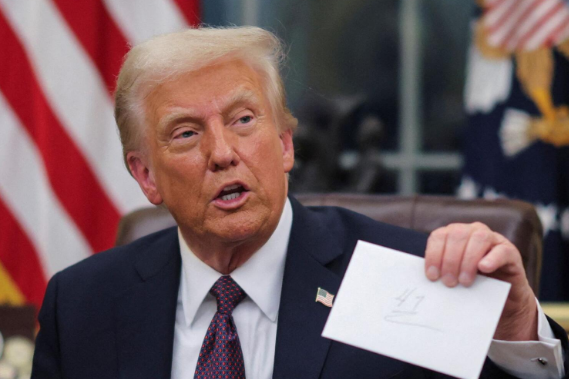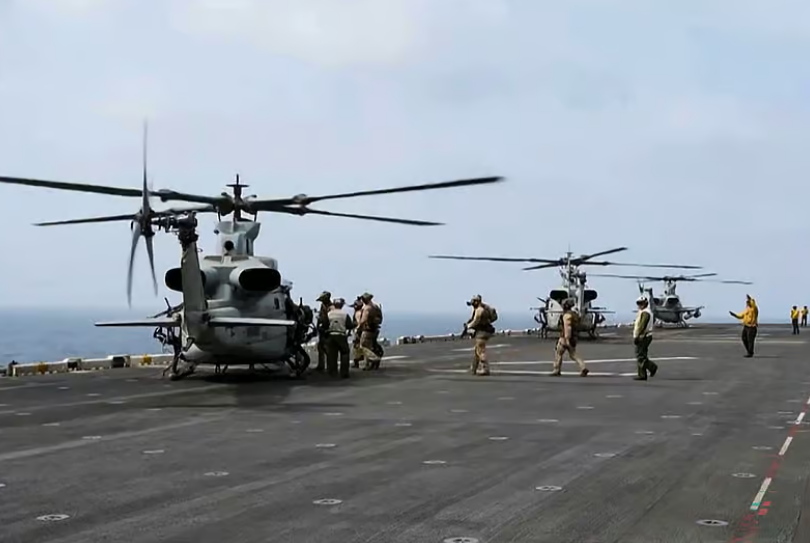
US President Donald Trump’s visit to Ankara for the NATO summit is expected to improve prospects for Türkiye’s acquisition of additional fighter jet engines for its domestically developed KAAN aircraft, although analysts say it is unlikely to resolve the long-running dispute over Ankara’s participation in the F-35 programme.
The July 7-8 NATO summit, hosted by Turkish President Recep Tayyip Erdogan, brings together leaders of the alliance’s 32 member states. The meeting is expected to provide an opportunity for discussions on defence cooperation, regional security and military procurement.
Last month, Trump hinted at progress in defence ties when he said he would make Erdogan “very happy” after being asked about Türkiye’s request to obtain F110 jet engines and rejoin the US-led F-35 fighter programme.
Defence analysts believe Trump’s comments primarily relate to approval for additional General Electric F110 engines that power Türkiye’s KAAN stealth fighter prototypes. The aircraft, developed by Turkish Aerospace Industries, is intended to replace the Turkish Air Force’s ageing fleet of F-16 fighter jets and strengthen the country’s defence industry.
Sinan Ulgen, director of the Istanbul-based EDAM think tank, said Türkiye has already flown prototype KAAN aircraft using F110 engines but requires more engines to expand testing and accelerate development. He said around 40 additional engines could receive approval if political obstacles are removed.
Türkiye has long planned to replace the imported engines with a domestically produced alternative, but officials have acknowledged that the local engine programme remains in its early stages. Defence Minister Yasar Guler previously said Ankara had received an initial shipment of 10 F110 engines and was seeking approval to purchase dozens more.
The engine deal has been delayed since Türkiye purchased the Russian-made S-400 air defence system in 2017, a move that prompted Washington to remove Ankara from the F-35 programme in 2019. The United States also imposed sanctions under the Countering America’s Adversaries Through Sanctions Act (CAATSA), affecting several Turkish defence projects.
Foreign Minister Hakan Fidan has argued that resolving the sanctions issue is essential for restoring defence cooperation with the United States, including access to F-35 aircraft and approval for KAAN engine deliveries.
Analysts, however, believe the dispute over the F-35 programme remains difficult to resolve. Congressional approval would likely be needed to remove CAATSA sanctions, while Türkiye’s continued possession of the S-400 missile system remains a major obstacle.
Professor Mustafa Aydin of Kadir Has University said that even if the White House supports renewed F-35 sales, Congress may be reluctant to reverse its previous position.
Former US diplomat Matthew Bryza suggested Trump has greater flexibility regarding the F-35 programme because participation was originally approved through executive authority. He added that lifting sanctions would still require congressional action, making any broader agreement politically sensitive ahead of the US midterm elections.
For now, analysts expect the NATO summit to deliver progress on engine exports for the KAAN project while leaving the broader F-35 dispute unresolved.