Iran’s ambassador to China has said Tehran plans to introduce new service fees for commercial vessels passing through the Strait of Hormuz, while indicating that countries viewed as friendly by Iran could receive preferential treatment under the proposed system.
Speaking at the World Peace Forum in Beijing on Saturday, Iranian Ambassador Abdolreza Rahmani Fazli said Iran was working with Oman to establish new arrangements governing navigation through one of the world’s most strategically important waterways.
The announcement comes after an initial agreement between Iran and the United States to halt their recent conflict included a provision allowing commercial vessels to pass through the Strait of Hormuz without charge for 60 days. It remains unclear what rules will apply once that temporary arrangement expires, as negotiations on a broader and more permanent settlement continue.
Fazli said the planned charges should not be viewed as a toll but as fees for services related to ensuring the safe and efficient movement of ships through the waterway.
“As a country where the Hormuz is part of its territorial waters, we will definitely charge service fees,” he said through a translator. He explained that the proposed framework would cover services including security for maritime traffic, supervision of vessel movements and measures to address the environmental impact created by the large volume of shipping passing through the strait.
The ambassador also suggested that Iran would differentiate between countries based on their relations with Tehran.
“We will definitely consider special treatment for the countries that were friendly to us and especially stood by us during the hard times,” Fazli said, without identifying which nations might benefit from such arrangements.
The proposal comes despite Washington previously rejecting the idea of imposing new charges on ships using the international shipping route. The United States has consistently supported freedom of navigation through the Strait of Hormuz, which serves as a critical corridor for global energy supplies.
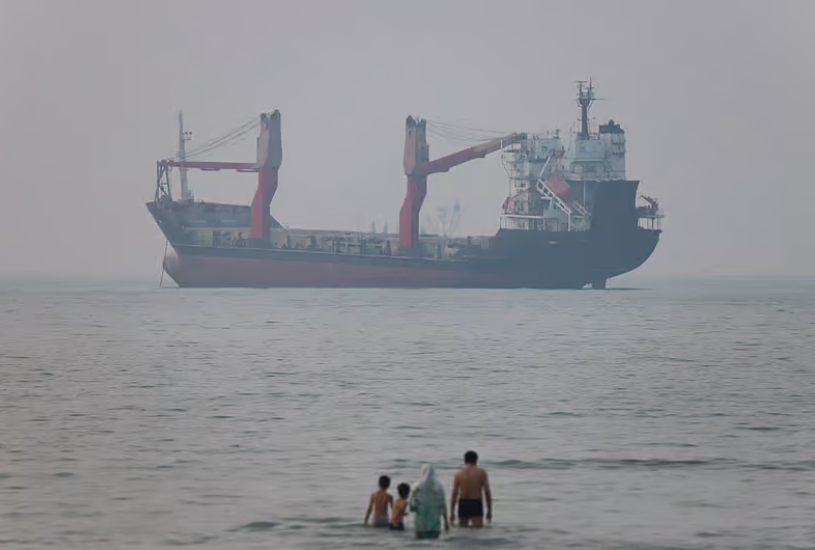
The Strait of Hormuz connects the Persian Gulf with the Gulf of Oman and the Arabian Sea and is one of the world’s busiest maritime chokepoints. Around one-fifth of global crude oil exports and significant volumes of liquefied natural gas pass through the narrow waterway each day, making its security a matter of international concern.
During the recent conflict in the Middle East, Iran effectively blocked shipping through the strait, disrupting energy markets and driving global oil prices sharply higher. The restrictions were lifted after Tehran and Washington reached an initial ceasefire agreement aimed at ending hostilities.
Diplomatic efforts are continuing to secure a long-term agreement between the two countries. Until a permanent arrangement is reached, uncertainty remains over how commercial shipping through the Strait of Hormuz will be regulated after the current 60-day period ends, particularly if Iran moves ahead with its proposed service fee system.