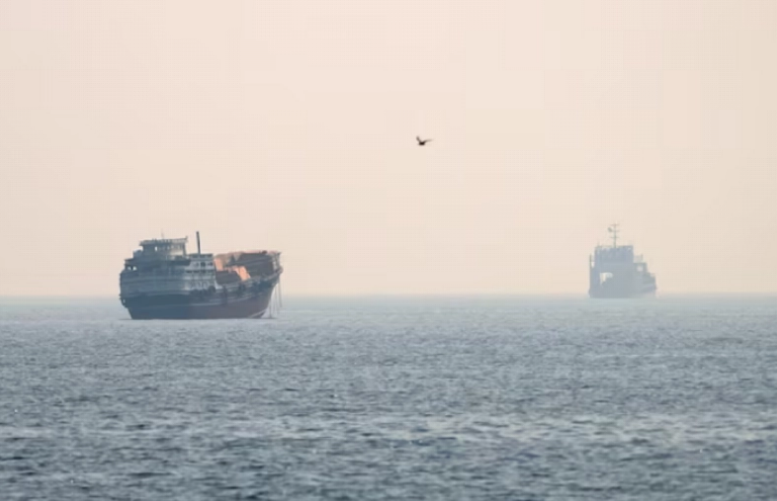
Commercial shipping through the Strait of Hormuz fell to its lowest level in several weeks on Sunday as escalating military exchanges between the United States and Iran and renewed attacks on vessels in the Gulf heightened concerns over maritime safety.
According to ship-tracking data from Kpler, only six vessels passed through the strategic waterway on Sunday, marking the lowest daily traffic recorded in five weeks. The Strait of Hormuz is one of the world’s busiest energy corridors, carrying a significant share of global crude oil and liquefied natural gas exports.
The data showed that tankers departing the Gulf included the Very Large Crude Carrier Humanity, transporting about two million barrels of Iranian crude oil, and the tanker Capetan Andreas, which was carrying roughly 500,000 barrels of Kuwaiti oil products. Three empty oil tankers entered the Gulf during the same period to load cargo.
Most vessels crossing the strait switched off their tracking transponders while passing through the sensitive area, making movements more difficult to monitor. Ship-tracking data also showed that no liquefied natural gas carriers were visibly entering the Strait of Hormuz over the weekend, highlighting the caution being exercised by shipping operators.
One tanker operated by Abu Dhabi National Oil Company was recorded leaving the strait between July 10 and July 12. The vessel is reported to be heading toward Dahej port in India.
The decline in shipping activity comes as military tensions continue to rise across the Gulf. The US Central Command announced that American forces carried out another round of precision strikes against multiple Iranian military targets on Sunday, saying dozens of sites were hit during the operation.
US President Donald Trump said commercial shipping remained free to use the Strait of Hormuz despite the ongoing conflict. His comments followed Iranian claims that the waterway had been closed after a vessel allegedly traveled along an unauthorized route and was struck following what Tehran described as a warning.
Iran has maintained that its actions are aimed at protecting its territorial waters and responding to military operations carried out by the United States. On Monday, Iran’s Revolutionary Guards said their naval forces stopped two ships in the Strait of Hormuz overnight by disabling their operating systems. The Guards did not identify the vessels or provide additional details.
The latest developments have renewed concerns among global energy markets, as any disruption to traffic through the Strait of Hormuz could affect oil and gas supplies worldwide. The waterway remains a critical route for energy exports from Gulf producers, and shipping companies continue to monitor security conditions closely while adjusting operations in response to the evolving situation.