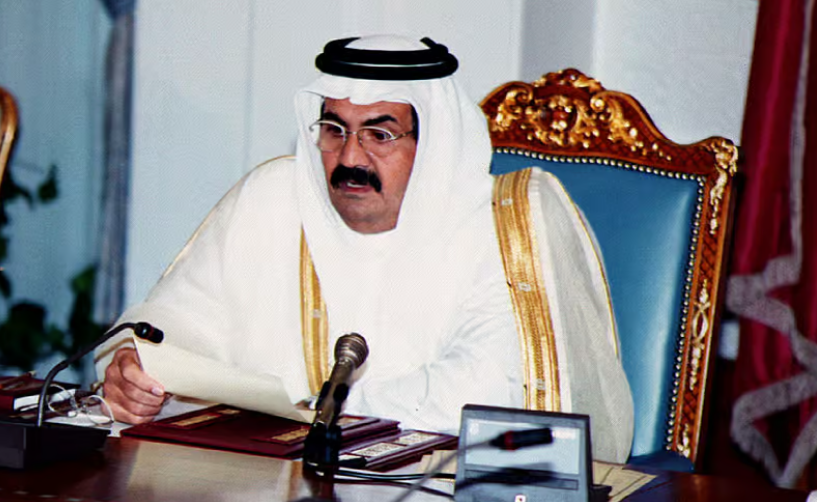
Qatar has declared a four-day period of public mourning following the death of former Emir and Father Amir Sheikh Hamad bin Khalifa Al Thani, whose leadership transformed the Gulf nation into a prominent regional and international player.
The Amiri Diwan announced that Sheikh Hamad passed away on the morning of Sunday, July 12. The mourning period began immediately and will continue for four days, during which flags across the country will be flown at half-mast in tribute to the late leader.
As part of the official mourning arrangements, work at ministries, government departments and public institutions will be suspended beginning Monday, July 13. Government employees are scheduled to return to work on Sunday, July 19.
Funeral prayers for Sheikh Hamad are to be held after the Maghrib prayer on Sunday at the Imam Muhammad bin Abdul Wahab Mosque in Doha. Following the prayers, he will be laid to rest at Lusail Cemetery.
Sheikh Hamad ruled Qatar from 1995 until 2013, when he voluntarily abdicated in favour of his fourth son, the current Emir, Sheikh Tamim bin Hamad Al Thani. His decision marked one of the rare peaceful transfers of power by a ruling monarch in the Gulf region.
During his 18 years as emir, Sheikh Hamad oversaw sweeping economic, political and social changes that reshaped Qatar’s position on the world stage. Backed by the country’s vast natural gas reserves, Qatar expanded its infrastructure, strengthened its global investment portfolio and pursued an increasingly active foreign policy.
His tenure also saw the launch and international expansion of the Al Jazeera television network, which became one of the most influential news broadcasters in the Middle East and significantly increased Qatar’s global visibility.
One of Sheikh Hamad’s most notable achievements was securing Qatar’s successful bid to host the 2022 FIFA World Cup, making it the first Middle Eastern country to stage football’s biggest tournament. The event accelerated large-scale infrastructure projects, including new stadiums, transport networks and urban development initiatives.
Several major international gatherings also took place in Qatar during his rule, including the 2006 Asian Games, the 2012 United Nations Climate Change Conference, the Doha Agreement aimed at resolving Lebanon’s political crisis and the Fatah-Hamas Doha Agreement.
Tributes have begun arriving from across the region and beyond, recognising Sheikh Hamad’s role in shaping modern Qatar and expanding its influence in diplomacy, media, sports and economic development.
The official mourning period is expected to bring together leaders, dignitaries and members of the public to honour a figure widely credited with guiding Qatar through a period of rapid transformation and positioning the country as a significant voice in regional and international affairs.