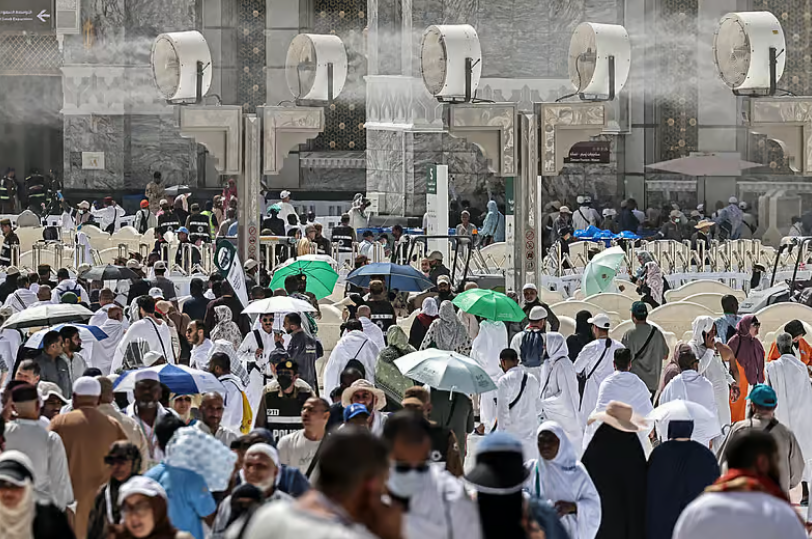
More than 1.5 million pilgrims from abroad have arrived in Saudi Arabia ahead of this year’s Hajj pilgrimage, surpassing last year’s international arrival figures despite regional conflict and travel disruptions across the Middle East.
Saudi authorities said the number of pilgrims entering the kingdom continues to rise as preparations intensify for the annual religious gathering, with formal Hajj rituals scheduled to begin on Monday.
Saleh Al-Murabba, commander of Saudi Arabia’s Hajj Passport Forces, announced during a press conference late Friday that international arrivals had reached 1,518,153 pilgrims.
The figure has already exceeded the number of overseas pilgrims recorded during last year’s Hajj, when 1,506,576 worshippers travelled from outside Saudi Arabia. Overall participation in 2025 reached 1,673,320 pilgrims, including domestic attendees.
Officials expect this year’s total to increase further as pilgrims continue to enter the kingdom over the coming days.
The strong turnout comes despite weeks of instability in regional air travel caused by the conflict sparked by US and Israeli strikes on Iran in late February. The escalation prompted Tehran to launch multiple strikes targeting Saudi Arabia and other Gulf states, triggering widespread airspace closures and significant disruption to commercial aviation.
The turmoil affected travel schedules across the region, with airlines cancelling or rerouting flights and ticket prices climbing sharply during periods of restricted air traffic.
Major Gulf carriers based in the UAE, Qatar and Bahrain have since moved to restore operations, gradually reopening routes and rebuilding schedules after prolonged disruption. Airlines worked to recover capacity as authorities coordinated efforts to stabilise regional travel networks ahead of one of the busiest periods in the Islamic calendar.
Despite the logistical challenges and heightened security concerns, pilgrims have continued arriving in large numbers, underscoring the religious significance of Hajj for Muslims worldwide.
Saudi authorities have spent months preparing for the influx, coordinating immigration procedures, transport networks and security measures to accommodate millions of worshippers expected to gather in the holy sites.
Hajj is one of the five pillars of Islam and is required at least once in a lifetime for Muslims who are physically and financially able to undertake the journey.
The pilgrimage draws believers from across the globe each year and remains one of the world’s largest annual religious gatherings.
With arrivals still ongoing and the main rituals yet to begin, Saudi officials expect final attendance figures to rise over the weekend, potentially setting the stage for another major Hajj season despite the geopolitical tensions that have unsettled the wider Middle East.