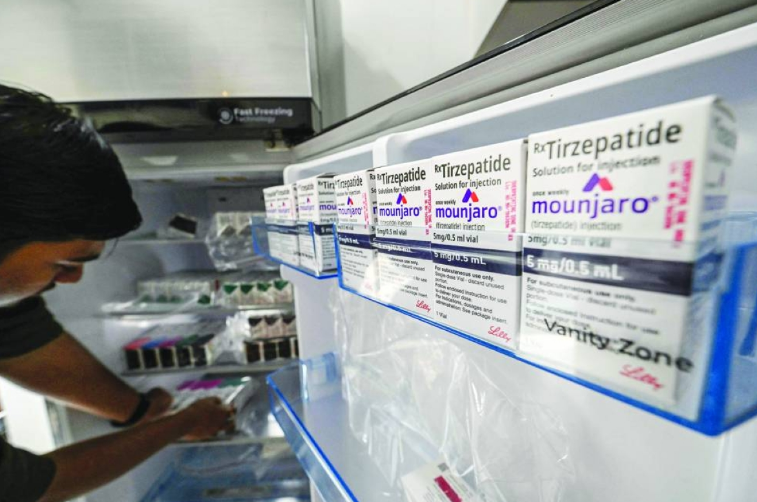
A deluge of weight-loss drugs is set to transform the global fight against obesity as India prepares to unleash low-cost generic versions of injections like Ozempic after a key patent expired Friday.
The development is expected to significantly expand access to treatments that were previously unaffordable for many patients, particularly in middle-income countries. Doctors in major cities such as Mumbai say they are already preparing for a surge in demand.
Endocrinologist Nadeem Rais said more than 50 people visit his clinic each week seeking weight-loss injections, with around 70 to 80 patients currently undergoing treatment. He expects those numbers to rise sharply as prices fall. “When generics come out and prices drop, that could go up to 200 easily,” he said.
The patent expiry covers semaglutide, the active ingredient in widely used drugs such as Ozempic and Wegovy. India, known as the world’s largest supplier of generic medicines, is now poised to produce cheaper alternatives at scale. By the end of 2026, patents on semaglutide are set to expire in 10 countries representing nearly half of the global obesity burden, including Brazil, China, South Africa, Turkiye, and Canada.
Indian pharmaceutical companies are moving quickly to capture the opportunity. At least four major firms have already prepared generic versions, with some announcing immediate launches. Industry estimates suggest more than 50 brands could enter the Indian market, with over 40 companies competing to supply the drug.
The timing reflects a shift in India’s health profile. While undernutrition remains a challenge, obesity rates have risen steadily. Government data shows that 24 percent of women and 23 percent of men in India are now overweight or obese. Doctors attribute this trend to more sedentary lifestyles linked to rising incomes and urbanization.
High costs have so far limited access to treatment. Monthly therapy can cost between 15,000 and 22,000 rupees, placing it out of reach for many patients. Swati Pradhan, who runs a weight-loss clinic in Mumbai, said prices could drop to around 5,000 rupees per month once generics become widely available, opening the door to a much larger patient base.
The global implications could be significant. India supplies more than half of Africa’s generic medicines, and cheaper semaglutide could expand access in countries where obesity is increasing but treatment remains scarce. Simon Barquera, president of the World Obesity Federation, said lower-cost drugs could improve access but warned that medication alone will not address the broader causes of obesity.
Patients such as 46-year-old Sukant Mangal, who lost nearly 30 pounds in eight months, say affordability remains the biggest barrier. Many discontinue treatment early due to cost. “Had it been cheaper, it would’ve been much easier to have it,” he said.
As generic versions enter the market, India is set to play a central role in reshaping access to obesity treatment worldwide.