Residents of fire-ravaged communities northwest of Athens began returning to their homes on Tuesday, confronting widespread destruction as firefighters continued efforts to contain persistent wildfire hotspots across Greece.
Although the worst of the fires had eased, hundreds of firefighters, supported by aircraft and international reinforcements from Romania and France, remained deployed across rugged terrain west of Athens near the Gulf of Corinth. Crews have been battling the blazes since Friday, with difficult weather conditions slowing progress.
Officials said strong, dry meltemi winds blowing from the Aegean Sea repeatedly grounded water-bombing aircraft, allowing the flames to spread through forests and residential areas.
Deputy fire brigade spokesperson Ioannis Artopoios told public broadcaster ERT that firefighters faced major challenges because aircraft were unavailable for about 30 consecutive hours due to the weather, limiting efforts to control the fast-moving fire.
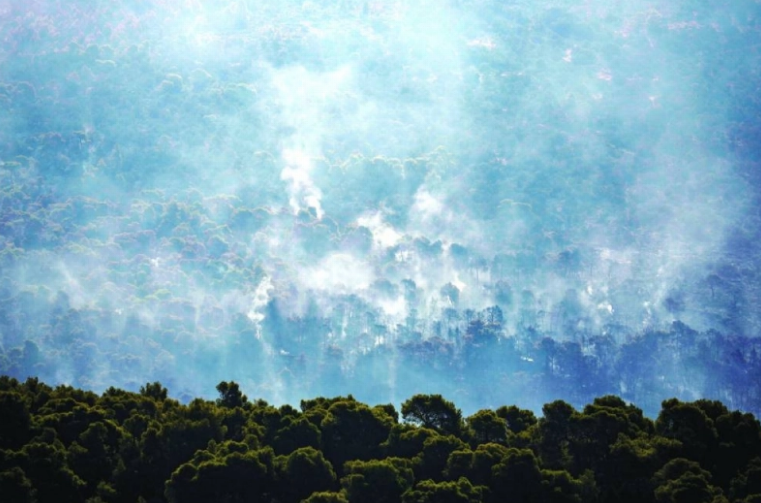
In Porto Germeno, a coastal town about 60 kilometres northwest of Athens, residents surveyed the damage left behind. Burned homes, blackened hillsides and scorched pine forests stretched across the landscape.
Among those returning was 45-year-old Vivi Gialia, who found her parents’ home destroyed. Looking over the remains of the property where she had spent childhood summers, she described the loss as heartbreaking and said nothing was left of the place where her family had created cherished memories. She also criticised what she believed was a slow emergency response during the height of the fire.
Nearby, 68-year-old Psatha resident Aimilios Ioannidis stood outside his home overlooking hills now reduced to ash. Although his house survived, he said the surrounding devastation would remain for years, describing the burned landscape as a lasting emotional wound. He also expressed frustration with the handling of the early stages of the fire, arguing that several smaller outbreaks were allowed to merge into a major blaze.
The fires struck an area popular with residents of Athens seeking summer retreats. Authorities said the blaze may have been triggered by sparks from vibrating electricity cables, though investigations are continuing.
The disaster was also marked by tragedy in the air. Two crew members aboard a firefighting helicopter were killed on Sunday near Psatha after their aircraft collided with another helicopter during operations. The second aircraft landed safely, and its two crew members survived. Greek authorities said the US Federal Aviation Administration is assisting with the investigation because both helicopters were US-registered Bell aircraft.
Animal rescue volunteers have also been responding to the emergency. More than 200 farm and companion animals rescued from affected areas are being cared for at a shelter in the nearby town of Megara.
Inside damaged neighbourhoods, residents began the difficult task of clearing debris from burned homes. Blackened doorways, shattered roof tiles and smoke-damaged interiors stood as reminders of the fire’s destructive path, while small religious shrines commonly found outside Greek homes remained standing in some locations despite the devastation around them.
The Greek government has pledged financial compensation for homeowners whose properties were damaged or destroyed.
Greece has largely avoided major wildfires earlier this summer, but recent weeks of extreme heat and dry conditions across southern Europe have increased fire risks. Scientists have linked the growing frequency and intensity of such wildfires to climate change, with countries including France and Spain also battling large blazes during the summer months.