The government of Bangladesh has directed civil servants to reduce electricity use by switching off lights and limiting air conditioning, as rising global energy costs linked to the Middle East conflict deepen the country’s power crisis.
Officials said the measures were introduced to ease pressure on fuel supplies in the nation of 170 million people, which depends heavily on imports for its energy needs. Bangladesh imports around 95 percent of its oil and gas, leaving it vulnerable to price shocks and supply disruptions.
The Ministry of Public Administration issued a set of instructions late Sunday aimed at cutting energy consumption across government offices. Ministry official Sakhawat Hossain confirmed the directive on Monday, saying it focuses on reducing unnecessary use of electricity and fuel.
“Only the necessary number of lights, fans, air conditioners, and other electrical equipment should be used,” the order stated. Civil servants have also been reminded to turn off lights when leaving offices, while air conditioning units must be set at 25 degrees Celsius or higher to conserve power.
The move comes as Bangladesh faces mounting economic strain due to higher global energy prices, which have been driven in part by disruptions linked to tensions in the Middle East. The rising cost of fuel imports has placed additional pressure on the country’s foreign exchange reserves and public finances.
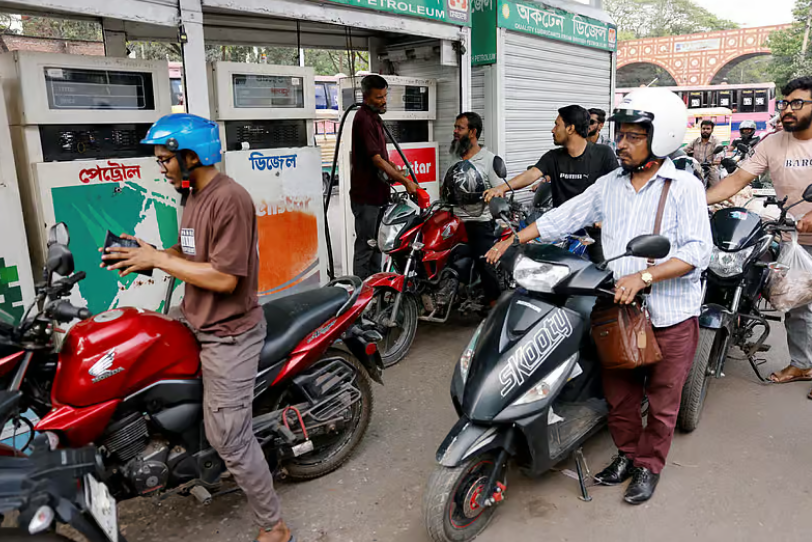
To manage the crisis, the government has taken a series of steps in recent months. These include limiting fuel purchases, suspending production at most fertilizer factories, and deploying police to monitor fuel stations and prevent hoarding. Officials say these measures are necessary to maintain supply and prevent further shortages.
Bangladesh is also seeking financial support from international partners. Authorities have indicated that the country is pursuing loans of around $2 billion from multilateral donors to help stabilize the energy sector and support the broader economy during the current period of uncertainty.
The latest directives highlight the challenges faced by energy-importing nations as global markets remain volatile. Analysts say countries like Bangladesh are particularly exposed to external shocks, given their reliance on imported fuel and limited domestic energy production.
While the government’s conservation measures are expected to reduce immediate demand, officials acknowledge that longer-term solutions will require investment in energy diversification and infrastructure. For now, the focus remains on managing consumption and ensuring that essential services continue to operate without disruption.
The situation underscores how geopolitical tensions far beyond South Asia are having direct consequences for everyday life in Bangladesh, as authorities work to balance energy needs with limited resources.