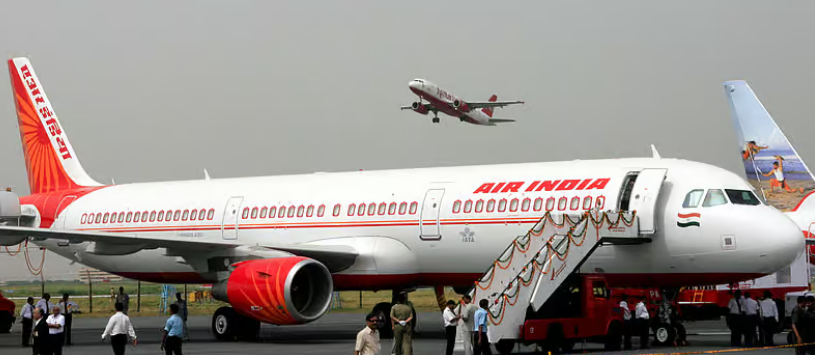
Air India has reportedly dismissed more than 1,000 employees over the past three years for ethical violations, as the carrier battles financial losses and growing pressure from the ongoing conflict in the Middle East.
According to media reports, the violations included theft from aircraft, allowing passengers to carry excess baggage without payment, and misuse of the airline’s employee leisure travel scheme. The dismissals come as the airline attempts to tighten internal controls during one of the most difficult periods faced by India’s aviation sector in recent years.
Outgoing chief executive and managing director Campbell Wilson, who resigned last month, reportedly addressed employees during a recent town hall meeting and urged staff to maintain ethical standards while carrying out their duties.
Wilson also warned employees that 2026 would be “a very, very difficult year” because of the ongoing war in the Middle East and its impact on global aviation.
Air India currently employs around 24,000 people. For the financial year ending March 31, 2026, the airline reported losses exceeding Rs220 billion, or about Dh8.5 billion. The company is now considering cost-cutting measures and possible reductions in flight operations as rising fuel prices and airspace restrictions continue to strain finances.
The airline is also searching for a new chief executive to guide the company through the crisis. Last month, Goh Choon Phong, chief executive of Singapore Airlines, which owns a 25.1 percent stake in Air India, met with N. Chandrasekaran, chairman of Tata Sons and Air India, in Mumbai to discuss the airline’s challenges.
Last week, Air India’s board reportedly reviewed several emergency measures, including possible furloughs and deferred bonus payments for staff.
India’s aviation sector has been hit hard by the conflict involving the United States, Israel and Iran. Airlines operating international routes have been forced to take lengthy detours after the closure of airspace over Iran and Pakistan, sharply increasing operational costs for flights heading toward Europe and North America.
Carriers have passed many of those costs on to passengers, leading some travellers to cancel overseas trips or delay visits to India.
The weakening Indian rupee and rising aviation turbine fuel prices have added to the pressure on airlines including IndiGo and SpiceJet.
The Federation of Indian Airlines has warned the Indian government that the aviation sector is under severe financial stress and risks major operational disruptions if conditions worsen.
The group said fuel prices for international operations rose by Rs73 per litre, making many international routes financially unsustainable. Aviation turbine fuel now accounts for nearly 60 percent of operating costs for Indian carriers on international routes, compared with around 40 percent previously.
Despite the mounting challenges, the Indian government has so far avoided increasing aviation fuel prices for domestic flights, offering limited relief to airlines focused on the local market.