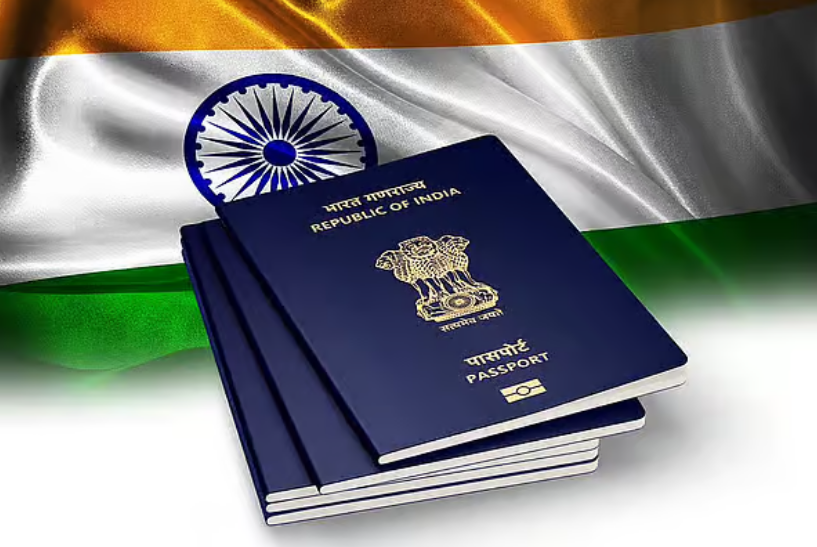
India has slipped to 80th place in the latest Henley Passport Index, despite its passport continuing to provide access to 56 destinations without requiring a visa before departure. The July edition of the global ranking highlights how changes in international travel agreements can affect a country’s standing even when its own travel access remains largely unchanged.
Earlier this year, India climbed to 75th position in the 2026 Henley Passport Index after improving from 85th place in 2025. The latest decline reflects stronger gains made by other countries rather than a reduction in the number of destinations available to Indian passport holders.
Compiled using data from the International Air Transport Association (IATA), the Henley Passport Index measures the travel freedom offered by 199 passports worldwide. India’s mobility score of 56 includes destinations that allow visa-free entry, visa-on-arrival access, electronic travel authorisations (ETA) or visitor permits.
Indian travellers can visit countries across Asia, Africa and the Caribbean with fewer travel formalities. Popular destinations offering easier access include Bhutan, Nepal, Malaysia, Mauritius, Thailand, Fiji and the Philippines, while countries such as the Maldives, Indonesia, Sri Lanka, Jordan, Qatar and Cambodia provide visa-on-arrival facilities or similar simplified entry arrangements.
However, Indian passport holders are still required to obtain visas before travelling to several major destinations, including the United States, the United Kingdom and most countries within the Schengen Area.
Experts note that passport rankings are based on relative performance rather than absolute changes. A country’s position can fall if other nations secure additional visa-waiver agreements or strengthen diplomatic travel arrangements more quickly. Factors including international cooperation, border security standards and reciprocal visa policies all influence the rankings.
The latest index comes as India’s passport has attracted increased public attention. During Passport Seva Divas last month, the Ministry of External Affairs reiterated that a passport is primarily a travel document and should not be treated as definitive proof of citizenship. The statement sparked debate after the government said citizenship is established through underlying legal records rather than the passport itself.
The discussion has also coincided with the government’s first passport fee revision in 14 years, renewing focus on the document’s role in international mobility.
For the millions of Indian nationals living in the United Arab Emirates, travel opportunities can extend beyond the passport ranking alone. Several countries provide simplified entry procedures or visa-on-arrival access for Indian passport holders with valid UAE residence visas. Popular destinations for UAE-based travellers include Mauritius, Seychelles, Thailand, Malaysia, Nepal and Bhutan, while countries such as Georgia, Azerbaijan, Kenya, Madagascar, Jordan and the Maldives also offer relatively straightforward entry procedures, subject to current immigration regulations.
Travel experts advise passengers to confirm visa requirements with airlines, embassies or immigration authorities before departure, as entry rules and documentation requirements can change with little notice.