Dubai is set to expand its walking, cycling and e-scooter infrastructure after the Roads and Transport Authority (RTA) approved a five-year plan aimed at making short-distance travel safer and more convenient across the emirate.
The programme will focus on improving “soft mobility” by developing infrastructure in 25 residential communities and upgrading the areas surrounding 63 public transport stations by 2030. The goal is to make first- and last-mile journeys easier, encouraging more people to walk, cycle or use e-scooters when travelling to and from Metro and bus stations.
The RTA said the initiative is designed to strengthen links between residential neighbourhoods and the public transport network, reducing dependence on private vehicles for short trips.
Work has already begun in several parts of the city, including Dubai Marina, Naif, Al Rigga, Al Murar and Al Muraqqabat. These areas are being equipped with new pedestrian walkways and cycling infrastructure to improve accessibility and safety for residents and visitors.
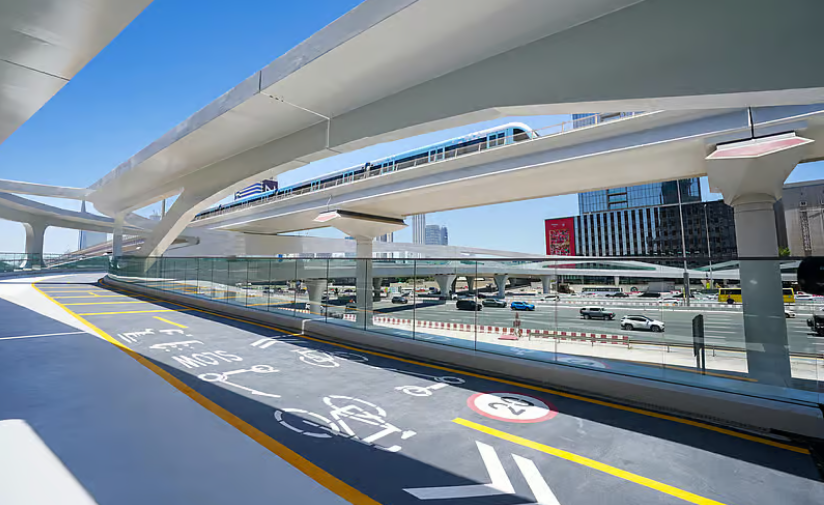
As part of the wider plan, the authority will introduce broader footpaths, dedicated cycling tracks, shaded pedestrian routes, improved road crossings, bicycle parking spaces and designated pick-up and drop-off zones around Metro and bus stations. These upgrades are intended to make public transport more accessible while providing safer travel options for pedestrians and cyclists.
The RTA believes that improving first- and last-mile connectivity is an important step toward increasing public transport use. Many commuters rely on private vehicles for short journeys between their homes and nearby stations, and the authority hopes the new infrastructure will offer practical alternatives.
The expansion comes as Dubai continues to promote sustainable transport and reduce traffic congestion through investment in alternative mobility options. Walking, cycling and e-scooters have become increasingly popular for short-distance travel, supported by dedicated tracks and improved urban planning across the city.
Recent figures released by the RTA highlight the growing demand for these transport modes. In 2025, Dubai recorded 342 million pedestrian journeys, alongside 57.3 million cycling trips and 39.6 million e-scooter trips. The figures indicate that residents are increasingly choosing alternatives to private cars for shorter journeys.
Officials say the five-year programme will build on this momentum by creating safer, more connected transport corridors throughout the emirate. The improvements are expected to benefit commuters, residents and tourists alike while supporting Dubai’s broader strategy of developing a more sustainable and accessible transport system.
Once completed, the expanded soft mobility network is expected to provide easier access to public transport, improve road safety and encourage healthier travel habits as Dubai continues to invest in modern urban infrastructure.