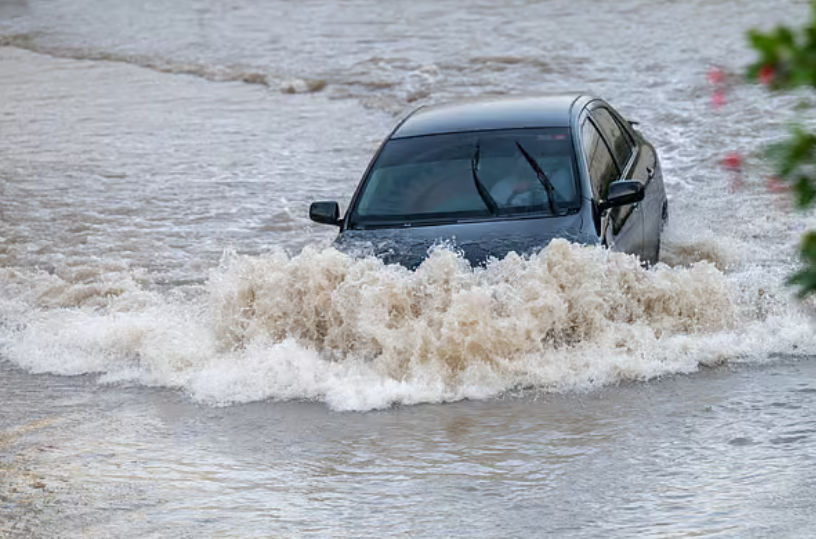
Property developers across the United Arab Emirates have activated emergency response plans to support residents following some of the heaviest rainfall in the country’s history, which has led to widespread flooding and damage to homes and vehicles.
Engineering and maintenance teams have been deployed around the clock to assist affected communities, while developers are offering free maintenance services in cases covered under warranty. Property developers in the UAE have activated emergency protocols to help communities deal with flooding after heavy rains this week and are also providing free maintenance where applicable.
Ziad Haddad, senior vice-president at Damac Properties – Loams, said support measures include coordinating cleaning operations, providing technical guidance, and connecting residents with service providers to address issues quickly. Problems that fall within the Defects Liability Period (DLP) or warranty are being escalated for immediate resolution.
The DLP typically lasts between six and 12 months after project completion, allowing residents to occupy properties while contractors remain responsible for fixing structural or construction-related issues at no cost.
Developers said they had taken steps ahead of the storms to minimise disruption. Winston Klint, chief operating officer at Meraki Integrated Contracting, said residents were notified in advance and advised to take precautions. Facility management teams were deployed continuously over several days, with additional staff on standby to respond to emergencies. He added that no major incidents had been reported in their communities and that all units remain covered under the DLP for prompt repairs.
Francis Alfred, managing director of Sobha Realty, said extreme weather highlights the importance of building resilient infrastructure. He noted that teams conducted overnight inspections and proactive water clearance to keep roads accessible and reduce disruption.
Developers also implemented preventive measures such as positioning water tankers, installing sandbags in vulnerable areas, and sealing exposed electrical systems to prevent water damage. Water evacuation strategies included the use of sump pumps, dewatering equipment, and temporary containment solutions, particularly in low-lying or flood-prone locations.
Tizian Raab, vice-president at Azizi Developments, said communication channels have been strengthened, with hotlines, email support, and mobile applications allowing residents to report issues quickly. Teams are monitoring properties continuously and coordinating with service providers to prioritise urgent cases.
Haddad also urged residents to maintain adequate insurance coverage for their homes and belongings to ensure protection against unexpected damage.
Emergency protocols remain in place, with teams operating on-site and monitoring conditions through integrated systems. Loams, the community management arm of Damac Properties, oversees more than 50,000 residential units, serving an estimated 300,000 residents.
The response underscores the scale of the weather event and the efforts being made to safeguard communities and restore normal conditions as quickly as possible.