“Euro zone business activity growth slowed more than expected at the end of 2025 as a contraction in manufacturing deepened while the expansion in the dominant services industry eased, a survey showed.” Fresh data underline a fragile end to the year for the bloc’s economy, after months of relative resilience amid global uncertainty.
The HCOB Flash Eurozone Composite Purchasing Managers’ Index (PMI), compiled by S&P Global, fell to 51.9 in December from 52.8 in November, marking a three-month low. The reading came in below expectations from economists polled by Reuters, who had forecast 52.7. Even so, the index remained above the 50 mark that separates expansion from contraction, allowing the euro zone to record its first full calendar year of growth since 2019.
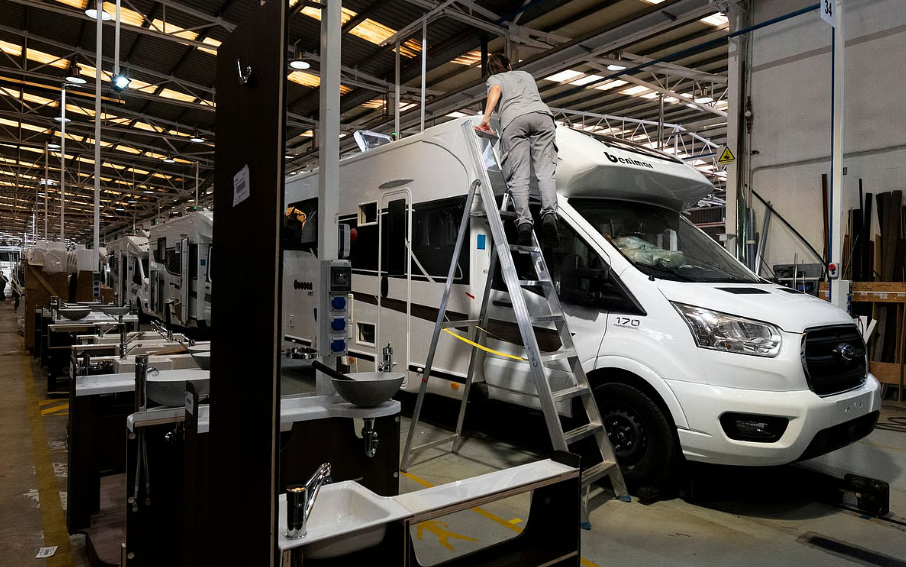
For much of 2025, the currency bloc held up despite higher U.S. tariffs and persistent geopolitical risks. That steadiness weakened toward year-end, with manufacturing emerging as the main drag. The factory sector contracted for a second straight month, with its PMI sliding to 49.2 from 49.6, the weakest level since April and below market expectations.
An index tracking manufacturing output slipped into contraction for the first time in ten months, while new orders fell at the fastest pace since February, pointing to fading demand as companies head into the new year.
Cyrus de la Rubia, chief economist at Hamburg Commercial Bank, said the downturn was being driven largely by Germany. “The weaker performance is primarily attributable to German industry, where the downturn intensified,” he said, while noting tentative signs of improvement in French factories. “All in all, the runway into the new year seems pretty unstable.”
Services continued to support overall activity, though momentum softened. The services PMI declined to 52.6 from November’s 53.6, a two-and-a-half-year high, and also missed forecasts. Economists say the sector’s strength has helped cushion the wider economy, but its ability to offset manufacturing weakness may be limited.
Looking ahead, business confidence deteriorated. Optimism about future activity fell to its lowest level since May, reflecting concerns about demand and costs. Even so, firms increased hiring at a faster pace, suggesting employers remain reluctant to shed staff despite slower growth.
Price pressures showed renewed signs of life. Input costs rose at the quickest pace since March, and companies charged higher prices for their goods and services. Headline inflation has edged up in recent months but remains close to the European Central Bank’s 2 per cent target.
With growth losing traction but inflation contained, policymakers are widely expected to stay put. A separate Reuters survey indicated the ECB is likely to keep interest rates unchanged until at least 2027, as it waits to see whether manufacturing can regain momentum and provide a firmer foundation for the euro zone economy.