In today’s business environment, disruption is rarely sudden. Instead, it often begins with subtle warning signs such as shifting shipping routes, slowing vessels or unusual airspace movements. For companies operating across borders, these early signals are becoming increasingly difficult to ignore as global instability reshapes supply chains.
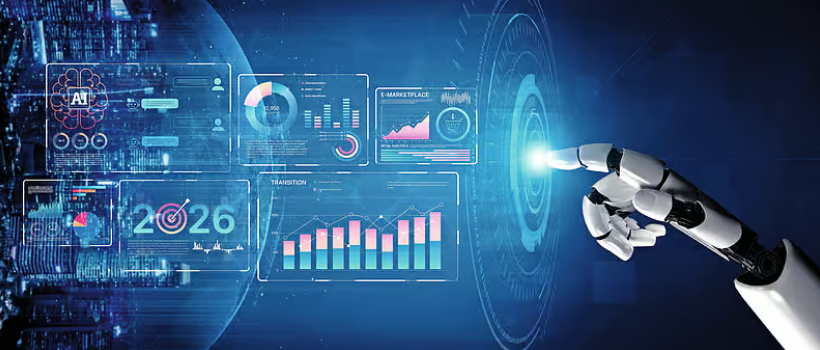
This shift is changing how businesses approach risk. Rather than waiting for disruptions to impact operations, companies are increasingly tracking developments in real time. Tools such as live logistics data, satellite imagery, supplier mapping platforms and AI-driven monitoring systems are now being used to identify vulnerabilities before they escalate into costly delays or sourcing issues. What was once handled by specialist risk teams is now becoming part of everyday decision-making across procurement, logistics and operations.
The growing reliance on real-time intelligence reflects a broader change in the global business landscape, where geopolitical instability is no longer a distant concern. Instead, it is directly influencing planning, sourcing and continuity strategies. As disruptions become faster and more complex, companies are shifting focus from reacting to events to anticipating them.
Jadd Elliott Dib, chief executive of PangaeaX, said advances in AI and data analytics are helping businesses move from reactive crisis management to predictive planning. He said companies are now modelling potential disruptions before they occur by combining multiple data streams, including trade flows, economic indicators and shipping activity. This approach allows firms to understand how a disruption in one region could affect delivery timelines, inventory levels and alternative routes.
Richard Chambers, senior adviser for risk and audit at Optro, said traditional methods of monitoring, such as periodic reports and analyst assessments, are no longer sufficient in a fast-moving environment. He noted that AI systems can continuously analyse large volumes of data, including news, social media, satellite imagery and government announcements, providing companies with greater visibility and speed in identifying risks.
The ability to model knock-on effects is becoming increasingly valuable. A disruption in a single trade corridor can ripple across supply chains, affecting freight costs, supplier reliability and customer delivery expectations. AI tools are helping businesses simulate these second- and third-order impacts, enabling more informed decision-making.
The importance of speed is particularly evident in major trade hubs such as the United Arab Emirates, where connectivity across Europe, Asia and Africa makes businesses highly exposed to regional developments. Companies operating in sectors such as aviation, logistics and energy must respond quickly to changing conditions, whether by rerouting cargo, adjusting flight paths or repositioning inventory.
Experts say real-time geopolitical intelligence is becoming essential for maintaining resilience. As global uncertainty persists, businesses are increasingly embedding these tools into their core operations. This shift is expected to continue, with AI-driven risk intelligence emerging as a standard capability for companies seeking to navigate an unpredictable global environment.