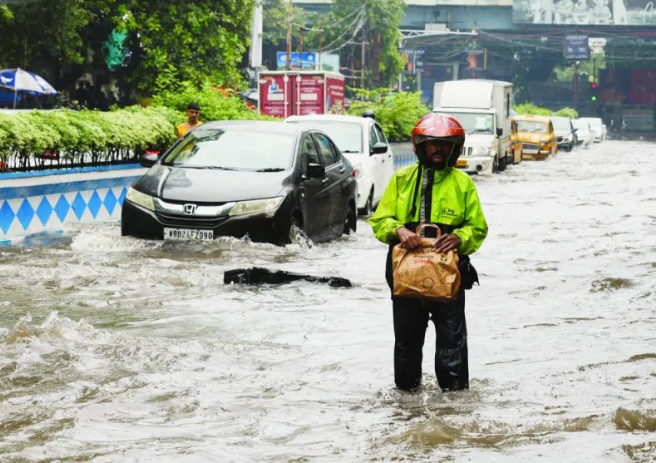
More than nine million people across the Philippines have been impacted by the combined effects of the Southwest Monsoon (Habagat) and tropical cyclones Crising, Dante, and Emong, the National Disaster Risk Reduction and Management Council (NDRRMC) reported on Saturday.
The disasters have claimed at least 37 lives, with five fatalities confirmed and 32 still under verification. According to the NDRRMC’s latest update, the affected population has reached 9,530,350 individuals, or approximately 2.6 million families.
Thousands have been forced from their homes, with 28,703 people (7,524 families) currently taking refuge in 273 evacuation centres nationwide. An additional 40,729 individuals (12,004 families) are receiving assistance outside these facilities. The number of injured has risen to 32, with 24 confirmed cases and eight pending confirmation.
The monsoon rains and storms have caused extensive damage to infrastructure, rendering 815 roads and 43 bridges impassable in several regions. A total of 88,492 houses have been either partially or totally destroyed, affecting communities in Northern Luzon, Calabarzon, Mimaropa, Bicol, Western Visayas, and parts of Mindanao.
Authorities estimate that 1.76 million families are in need of assistance, with the cost of required aid reaching nearly Php1.29 billion (Dh83.4 million). So far, government agencies and partners have provided relief to 1.39 million families, delivering food, shelter materials, and other essential support.
The agricultural sector has suffered significant setbacks, with losses estimated at Php3.16 billion (Dh204.5 million). More than 98,000 farmers and fisherfolk have been affected, as floods and strong winds damaged crops, fisheries, and livestock. Infrastructure losses are even greater, with damage estimated at Php16.5 billion (Dh1.06 billion). The worst-hit areas include Northern and Central Luzon, Calabarzon, Mimaropa, Western Visayas, Northern Mindanao, and Caraga.
Local governments, in coordination with the NDRRMC, are working to restore access to cut-off communities, repair damaged infrastructure, and provide continuing relief to displaced families. Weather forecasters warn that heavy rains could persist in some areas as the monsoon season continues, raising the risk of further flooding and landslides.
Authorities are urging residents in vulnerable areas to remain on alert and to heed evacuation orders when issued. Relief agencies and non-governmental organisations are also mobilising resources to supplement government assistance, particularly in remote and severely affected areas.
The NDRRMC has emphasised that recovery and rehabilitation will be a long-term effort, requiring sustained coordination between national agencies, local authorities, and humanitarian partners.