Greek authorities have begun assessing the destruction caused by a major wildfire that swept through communities west of Athens, leaving homes, businesses and farmland damaged as firefighters remained on alert for possible flare-ups.
Prime Minister Kyriakos Mitsotakis chaired a cabinet meeting on Wednesday to discuss compensation for those affected by the disaster and to review the environmental impact of one of the country’s latest wildfire emergencies.
Teams from Greece’s Environment and Civil Protection ministries were deployed to communities about 50 kilometres northwest of the capital, where residents have gradually returned after precautionary evacuations. Officials are inspecting damaged properties, farmland and public infrastructure while gathering information needed to determine financial assistance for victims.
The wildfire burned more than 14,000 hectares over five days before firefighters managed to bring it largely under control. Fire service spokesman Vassilis Vathrakoyannis said conditions had improved significantly, although emergency crews remained on maximum alert to tackle areas where smoke continued to rise.
Authorities said strong firefighting operations would continue until there was no further risk of the blaze reigniting, particularly in rugged terrain where high temperatures and dry vegetation can quickly fuel new outbreaks.
An initial investigation by the fire service indicates the blaze may have started on Friday after sparks from electricity cables operated by a private company in Agios Vasileios, a coastal village located at the foot of a mountain around 85 kilometres northwest of Athens. Investigators are continuing to examine the exact cause of the fire.
The wildfire spread rapidly as powerful winds, with gusts reaching 130 kilometres per hour, carried flames across forests and hillsides. The fire advanced from Agios Vasileios toward the southern slopes of Mount Kithairon before reaching the industrial and agricultural region of Megara, about 40 kilometres from Athens.
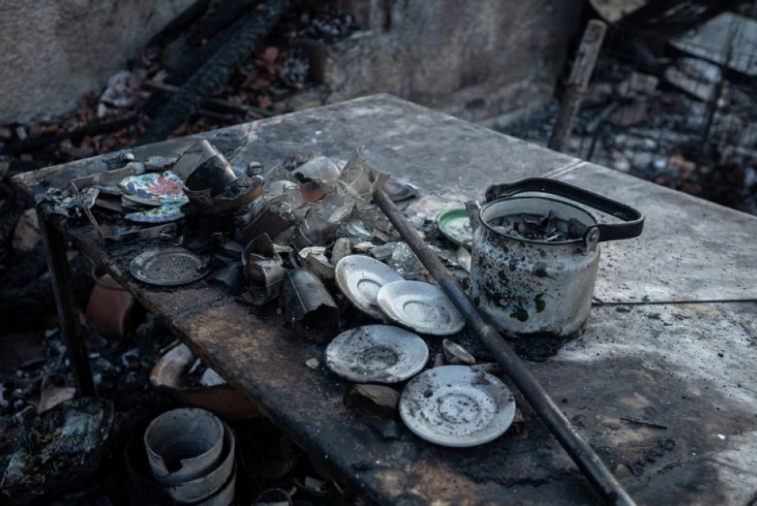
In the coastal resort of Porto Germeno, the destruction remains widespread. The smell of smoke still lingers across the area, where large sections of forest have been reduced to blackened ground and dozens of homes have been destroyed. Residents returning to inspect their properties found scorched landscapes, damaged buildings and burned farmland.
The latest disaster comes during a difficult wildfire season across southern Europe. Greece has been battling dozens of fires since late July, following destructive blazes in Spain and France that also strained emergency services.
The fires in Greece have claimed five lives, including three firefighters and two crew members aboard a helicopter involved in firefighting operations. The helicopter crashed while responding to the emergency, highlighting the dangers faced by crews working to contain fast-moving wildfires.
Officials said damage assessments will continue over the coming days as authorities determine the scale of financial support required for affected families and businesses. Environmental experts are also evaluating the long-term impact on forests, wildlife habitats and agricultural land as Greece continues efforts to recover from one of its most destructive fire outbreaks of the summer.