India is grappling with a shortage of liquefied petroleum gas (LPG), a key cooking fuel used by millions of households and businesses, as supply disruptions linked to the conflict in the Middle East affect shipments through the Strait of Hormuz.
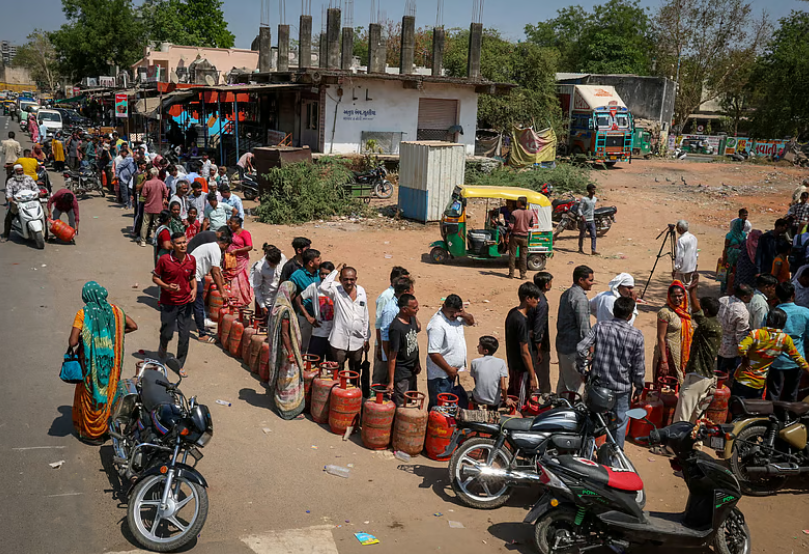
Cities and towns across the country have reported an unexpected shortfall in LPG cylinders, prompting long queues at distribution centres and increasing concern among consumers. Officials say the situation has been worsened by panic buying despite government appeals urging the public not to hoard fuel.
India imports about 60 percent of its LPG requirements, and roughly 90 percent of those shipments pass through the Strait of Hormuz. The waterway has become difficult to navigate due to the ongoing US-Israel-Iran conflict, creating delays in deliveries and tightening supply in the domestic market.
Sujata Sharma, joint secretary in the Ministry of Petroleum and Natural Gas, described the situation as challenging and called on consumers to conserve fuel. She urged the public to avoid panic purchases and use energy responsibly until supplies stabilise.
Officials say efforts are being made to maintain deliveries. Rajesh Kumar Sinha from the shipping ministry said the LPG carrier Shivalik had successfully crossed the Strait of Hormuz and was expected to reach India by Monday evening.
“Documentation, priority berthing, and everything have been arranged at the port so that there is no delay in the discharge of cargo by this vessel,” Sinha said.
He added that Indian authorities are closely monitoring maritime activity in the Gulf and maintaining contact with vessels operating in the region. According to the ministry, 22 Indian-flagged ships carrying 611 Indian seafarers remain west of the Strait of Hormuz, and no incidents have been reported in the past 24 hours.
Government officials also stressed that crude oil supplies remain stable and that refineries are operating at full capacity. A spokesperson said LPG cylinder bookings dropped from 8.88 million on Friday to 7.7 million the following day, suggesting that demand may be easing slightly after initial panic buying. Online bookings have also increased from 84 percent to 87 percent as more consumers turn to digital platforms for refills.
Authorities have reminded households that those with piped natural gas connections must surrender their LPG connections under existing regulations. Consumers using piped gas will no longer be allowed to obtain LPG refills from public sector oil companies.
The shortage has already begun to affect daily life. Some hotels and restaurants have switched to firewood for cooking, while others are focusing on dishes that require less preparation time or reheating.
Demand for alternative cooking appliances has also surged. Major online retailers reported a sharp increase in purchases of induction stoves over the past few days. A consumer survey conducted Monday found that nearly one quarter of 40,000 respondents across more than 300 districts had adopted alternative cooking methods due to concerns about LPG availability.
Political leaders have also raised concerns about the situation. Karnataka Chief Minister Siddaramaiah urged Union Petroleum Minister Hardeep Singh Puri to secure additional LPG supplies from alternative sources to prevent further disruption.
Opposition leader Mallikarjun Kharge criticised the government in parliament, accusing it of failing to act early despite warnings that the Middle East conflict could threaten energy supplies. He said the shortage was affecting poor households, middle-class families and small businesses, and warned that black marketeers were selling LPG cylinders at prices several times higher than normal.