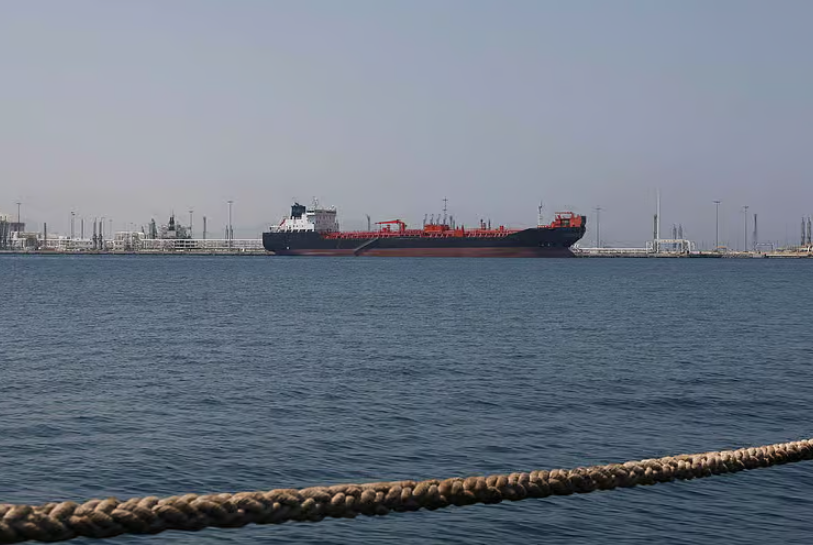
Commercial ships continue to pass through the Strait of Hormuz, but maritime traffic remains significantly below normal as a growing number of attacks raises concerns over the safety of vessels operating in the strategic waterway.
The Joint Maritime Information Center (JMIC), in a maritime security advisory issued on November 26, said 17 tankers had been struck in the strait since November 1. It warned that further attacks on tankers travelling in either direction were highly likely under current conditions.
The latest assessment came as Adnoc Logistics & Services confirmed that a Jordanian crew member missing since an attack on one of its vessels on November 17 had been found dead.
JMIC said the Strait of Hormuz was not completely closed, although shipping activity had fallen sharply compared with previous years. The waterway handled an average of around 138 vessel crossings a day in 2025.
US naval data recorded 128 US-assisted crossings between November 22 and 25, averaging 32 a day. This was down from an average of 38 daily crossings between November 19 and 21.
Separate tracking by S&P identified three commercial crossings by vessels weighing more than 1,000 deadweight tonnes during the same four-day period. All three were tankers travelling into the Gulf.
JMIC classified the security threat in the strait as severe, the second-highest level on its five-point scale. It reported four attacks during the latest reporting period, compared with three previously.
Three tankers travelling east through the strait were struck by unidentified projectiles on November 22. Another outbound tanker was hit on November 25, around 18 nautical miles east of Khasab, Oman. All four vessels continued their journeys, and their crews were accounted for.
The centre also warned mariners to remain alert to possible attempts to lay sea mines near shipping lanes. However, Iranian claims that tankers had struck mines had not been independently confirmed by official authorities.
Shipping congestion has also increased, with approximately 218 commercial vessels stationary at major anchorages east of the strait, including Fujairah, Khor Fakkan, Sohar and Musandam. Around 171 vessels were anchored near Fujairah and Khor Fakkan on November 26, compared with 167 on November 22.
Meanwhile, Adnoc L&S said 11 crew members were injured in the November 17 attack. Nine have been discharged from hospital, while two remain under medical care. The company extended its condolences to the deceased crew member’s family.
JMIC expects shipping activity to remain restricted along both the northern Iranian-controlled route and the southern Omani corridor as security concerns persist.
The US naval blockade of Iranian ports also remains in force, although neutral vessels are permitted to transit and may face questioning and inspections. The assessment indicates that the strait remains operational, but commercial shipping continues to face serious security risks and delays.