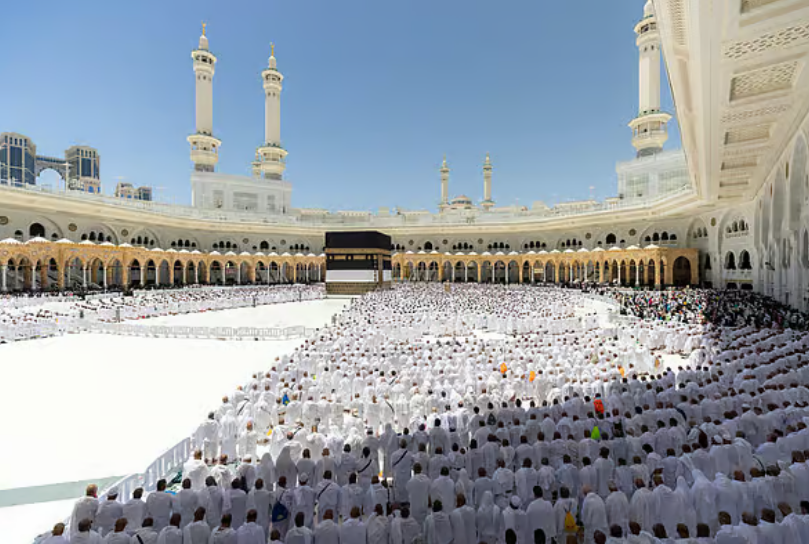
Authorities in Saudi Arabia have arrested 18 residents accused of forging residency permits, Nusuk cards and Hajj wristbands as the Kingdom intensifies security measures ahead of Hajj 2026.
The Saudi General Directorate of Public Security said the suspects, identified as Pakistani and Afghan nationals, were taken into custody during operations targeting illegal attempts to enter the holy city of Makkah without proper authorisation.
Officials confirmed that legal action had been initiated against the men and that the case had been referred to the Public Prosecution.
Saudi authorities have stepped up inspections and enforcement campaigns in recent weeks as preparations continue for the annual pilgrimage, which is expected to begin later this month depending on the sighting of the crescent moon on May 17.
The government has repeatedly warned residents and visitors against attempting to perform Hajj without official permits, stressing that strict regulations are intended to maintain safety, manage crowd levels and ensure smooth organisation during one of the world’s largest religious gatherings.
Security authorities said they had also intercepted several other attempts by individuals trying to infiltrate Makkah illegally in recent days. Officials have urged the public to report violations through emergency numbers operating across the Kingdom, including 911 in Makkah, Madinah, Riyadh and the Eastern Province, and 999 in other regions.
Last month, Saudi authorities announced a series of penalties for breaching Hajj regulations. The measures include fines of up to 100,000 Saudi riyals for individuals or organisations found facilitating unauthorised pilgrimages.
The penalties apply to anyone who obtains or applies for visit visas for individuals attempting to perform Hajj without permits, or for those who enter or remain in Makkah and the holy sites during the restricted period extending from the first day of Dhu Al Qi’dah, corresponding to April 19, until the end of the 14th day of Dhu Al Hijjah.
Authorities said the fines may be multiplied depending on the number of individuals involved in each violation.
The Nusuk card system and official Hajj wristbands were introduced as part of broader digital and security measures aimed at improving identification and crowd management during the pilgrimage season. The permits are required for access to key holy sites and are used to verify authorised pilgrims.
Saudi Arabia hosts millions of Muslims from around the world during Hajj each year, making security and logistical planning a major priority for authorities. The government has increasingly relied on technology, surveillance and stricter entry controls to prevent overcrowding and unauthorised access.
Officials have continued to stress that compliance with Hajj regulations is essential to protect pilgrims and maintain public safety throughout the pilgrimage period.