India’s government has said that decisions on whether ships sail through the Strait of Hormuz are made by shipping companies and charterers, rejecting claims that vessels require clearance or agreements with Iran for safe passage.
“The decision to sail through the strait is taken between the shipping company and the one which has chartered the ship,” said Rajesh Kumar Sinha, special secretary at the Ministry of Ports, Shipping and Waterways. He added that no payments or protection fees have been made by India to secure passage for its vessels.
Sinha emphasized that navigation through the strait remains governed by international conventions, which ensure freedom of movement. “Since the strait is narrow, only the entry and exit lanes are demarcated which need to be followed by shipping lines,” he said, dismissing reports that Indian vessels stranded in the Gulf were being allowed to move following any agreement with Iran.
India has maintained diplomatic engagement with Iran to support safe transit, but officials stress that no blanket arrangement exists. External Affairs Minister S. Jaishankar previously said there was no formal deal guaranteeing passage for Indian ships.
The Strait of Hormuz remains a vital route for India’s energy imports. A large share of the country’s crude oil, liquefied petroleum gas, natural gas, nitrogen fertilisers, and petrochemicals passes through the narrow waterway. India imports around 88 percent of its crude oil, 60 percent of its LPG, and 50 percent of its natural gas, with roughly 40 percent of crude supplies transiting through the strait.
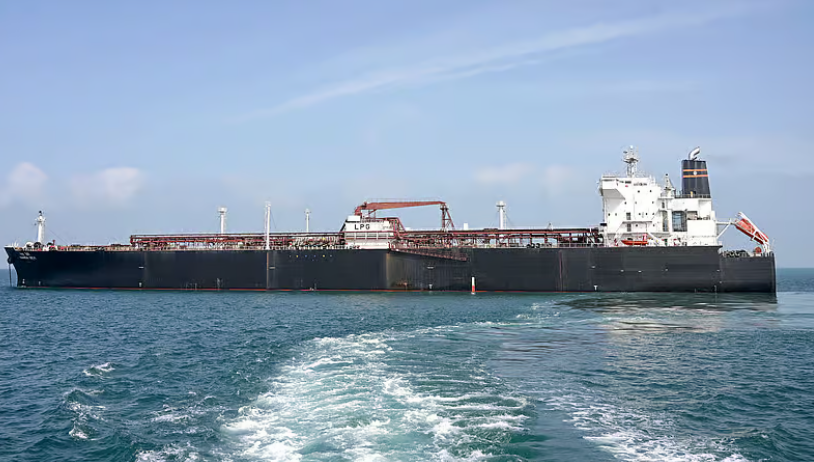
The ongoing conflict involving the United States, Israel, and Iran has disrupted shipping in the region, with about 500 tankers reportedly stranded in the channel. According to Indian officials, five India-flagged LPG carriers carrying about 230,000 tonnes of cooking gas remain stuck in the strait, along with around 20 other Indian vessels. These include crude oil tankers, container ships, bulk carriers, a chemical carrier, an LNG tanker, and vessels undergoing maintenance in dry dock.
At the start of the conflict, 28 India-flagged vessels were present in the strait. The evolving security situation has forced shipping operators to carefully assess risks before proceeding with voyages.
To support maritime safety, the Indian Navy has deployed warships under Operation Urja Suraksha, escorting and guiding India-flagged vessels through Gulf waters. The operation aims to ensure the protection of critical energy shipments and maintain supply lines amid heightened tensions in the region.
Officials say that while the situation remains uncertain, shipping decisions continue to be based on real-time assessments of safety conditions, rather than any formal arrangements with regional authorities.