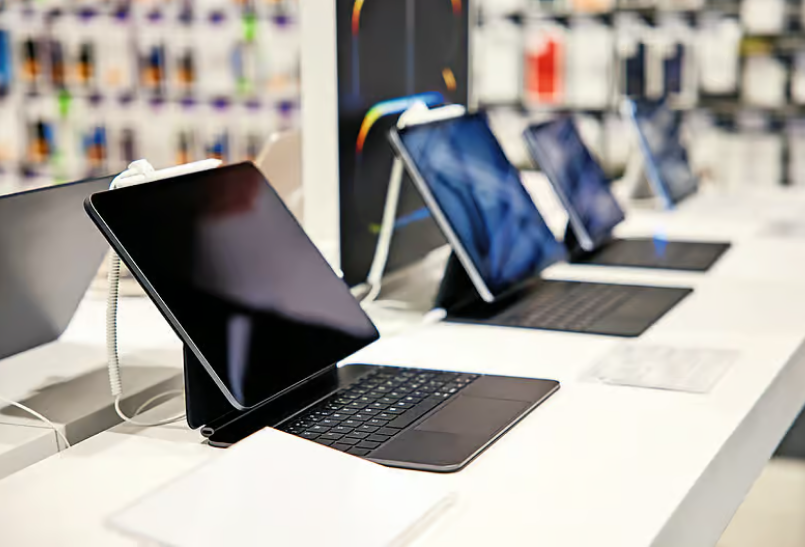
As workplaces continue to evolve beyond traditional office settings, professionals are increasingly turning to lighter and more adaptable technology to support changing work routines.
The shift reflects broader changes in how work is organised, with employees moving between offices, homes, airports and meeting spaces while relying on tools that prioritise mobility and focused productivity.
Industry research suggests mobile devices have become central to modern workflows. Workplace technology studies indicate nearly 75 per cent of employees consider mobile devices essential to their daily tasks, while more than a quarter of workers in leading industries are now provided with tablets as their primary work device.
The trend highlights growing demand for technology that balances portability with efficiency.
Hybrid work arrangements have accelerated this transition. Professionals such as lawyers, academics and business executives increasingly perform tasks across multiple locations rather than fixed desks. Reviewing documents between meetings, responding to emails while travelling and making decisions on the move have become routine parts of professional life.
This evolving work style has also brought renewed attention to the challenge of digital distraction. A 2024 study by workplace analytics company Insightful found that 62 per cent of employees said smartphone notifications interfere with concentration.
The findings have fuelled interest in devices designed around focused work rather than constant alerts.
Unlike smartphones, which are often associated with frequent notifications and multitasking, tablets are being positioned as more intentional workspaces suited for reading, note-taking and reviewing material.
Separate employee software surveys found that 62 per cent of workers believe tablets and mobile devices play an important role in improving productivity.
Technology firms have responded by developing compact devices aimed at professionals seeking mobility without sacrificing functionality. One example is the Huawei MatePad Mini, a lightweight tablet weighing 255 grams and measuring 5.1 millimetres thick.
Manufacturers increasingly market such devices as tools for continuous productivity rather than scaled-down alternatives to laptops.
Features such as anti-glare displays, digital handwriting support and longer battery life are viewed as particularly valuable for professionals working in varied environments.
Mansoor Essa Lootah, founder of a legal consultancy firm, said portability and quick access to documents are increasingly necessary.
“My day is built around reading, marking up and responding quickly,” he said, noting that moving between courtrooms, offices and client meetings requires technology that avoids carrying a full setup.
Academic professionals express similar views. Dr. Manar Abu Taleb of the University of Sharjah said digital note-taking and quick access to material help maintain workflow between lectures and meetings.
Global tablet use continues to grow, with more than 1.28 billion users worldwide. Analysts say larger screens, often combined with keyboards and stylus support, are helping tablets gain traction in education, remote work and business settings.
As hybrid work becomes more established, industry observers say productivity tools that reduce complexity and adapt to mobile lifestyles are likely to play a growing role in shaping the future workplace.