Microsoft UAE has cut the time its finance team spends on forecasting by 50% through the use of artificial intelligence, allowing the company to introduce two new roles without increasing its overall headcount.
Shereen Chalak Maalouf, chief finance executive at Microsoft UAE, said the technology had changed how the department collects and analyses information, giving employees more time to focus on business strategy and decision-making.
Speaking at the eighth edition of the NAFA Summit Dubai, a Khaleej Times event, Maalouf said the changes had also created new responsibilities within her team.
“I have two roles now on my team that did not exist exactly a year ago. I have someone who looks after strategic partnerships that we do at a country scale. And I have someone who looks after our Copilot and AI business,” she said.
The company redesigned its forecasting process through a system known as the UAE Command Centre. It uses an AI agent to collect financial information and business updates, identify developments that could affect forecasts and suggest adjustments to the finance team.
The system brings together financial metrics with information from regular business meetings, giving the AI agent access to updates from different departments across the organisation.
It also follows up with business teams to obtain information about developments that could influence expected performance. These may include positive opportunities or potential risks that could affect the company’s financial outlook.
After gathering the information, the agent recommends whether particular items should remain in forecasts, be removed or be flagged for further consideration.
However, the technology does not make the final decisions. Maalouf said the finance team reviews the recommendations and applies its own judgement before making any changes.
The reduction in time spent on routine forecasting work has allowed employees to take on responsibilities in areas such as strategic partnerships and the company’s Copilot and artificial intelligence business.
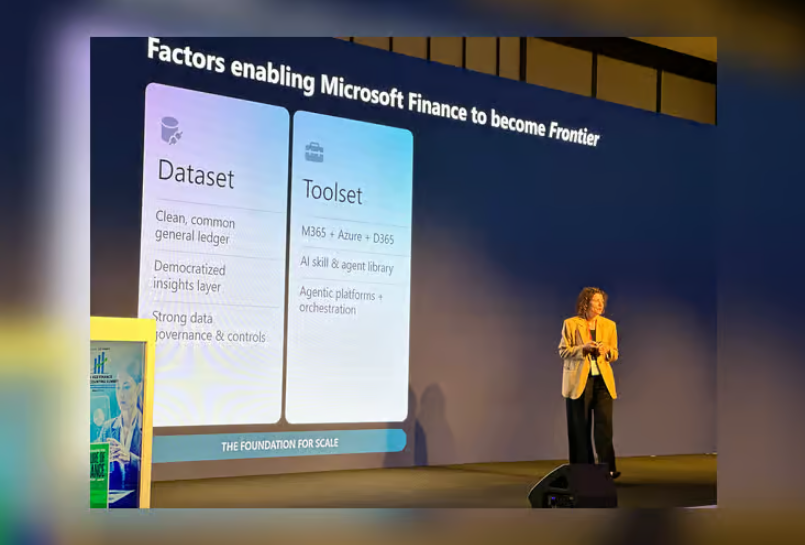
Maalouf said businesses seeking greater value from AI must focus on more than acquiring technology. They need clean, unified data, appropriate security controls and employees capable of redesigning existing processes around the new tools.
She also stressed that finance professionals must be able to examine AI-generated insights critically instead of accepting recommendations without question.
“The differentiator is the human element,” she said, explaining that employees need both the technical skills to work with AI and the judgement to determine whether its output makes commercial sense.
Microsoft UAE’s experience illustrates how companies can use AI to change the nature of finance work, shifting employees away from gathering and organising information towards analysis, planning and business decisions.