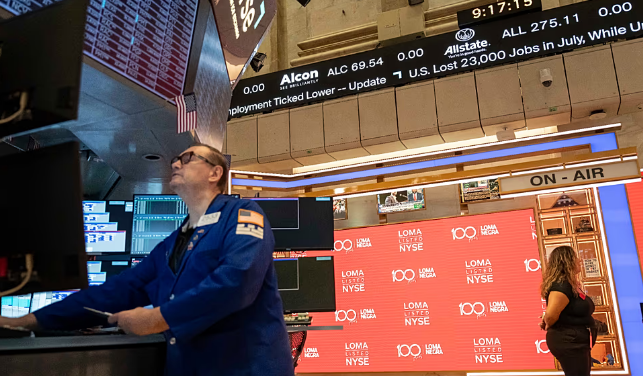
European stock markets have entered August 2026 with remarkable strength, defying a long-standing belief that the month is traditionally one of the weakest periods for investors.
The EURO STOXX 50 and Germany’s DAX have climbed to record highs, while France’s CAC 40 remains close to its peak. The strong performance has surprised many market participants, as August has often been associated with poor returns across Europe’s major equity markets.
Historical data shows that the reputation is only partly accurate. While August has delivered average losses over several decades, analysts say those figures are heavily influenced by a small number of severe financial crises rather than consistent yearly declines.
The EURO STOXX 50 has recorded an average August decline of 1.42% since its creation. Germany’s DAX has averaged a 1.03% loss since 1970, and France’s CAC 40 has fallen an average of 1.22% in August since 1988. September has historically been an even weaker month for all three indexes.
This year tells a different story. On August 11, the EURO STOXX 50 closed above 6,560 points for the first time, marking an all-time high and a gain of about 13% since the beginning of the year. The DAX also surpassed 26,450 points, while the CAC 40 finished near 8,740.
Analysts argue that the median return provides a clearer picture of August’s typical performance. For the EURO STOXX 50, the median August return is only -0.19%, suggesting that most years are relatively stable and that extreme events have distorted the long-term average.
Five historic crises account for much of August’s negative reputation. The Russian debt default in 1998, Iraq’s invasion of Kuwait in 1990, the eurozone debt crisis in 2011, the Asian financial crisis in 1997 and China’s yuan devaluation in 2015 all triggered sharp market declines during August. Excluding those years, the EURO STOXX 50’s average August return turns slightly positive.
Market specialists also point to seasonal trading conditions. August is traditionally a holiday period across Europe, leaving thinner market liquidity and making share prices more sensitive to unexpected news. With fewer monetary policy meetings scheduled during the summer, investors often have limited guidance until central bankers gather later in the month at the annual Jackson Hole symposium in the United States.
Despite the positive momentum, risks remain. Strong corporate earnings have supported European equities, but higher energy prices linked to Middle East tensions could revive inflation and pressure consumer spending and company profits.
Rather than proving August is destined to be a losing month, this year’s performance suggests investors should focus less on the calendar and more on the possibility of unexpected global shocks during a period of reduced market activity.