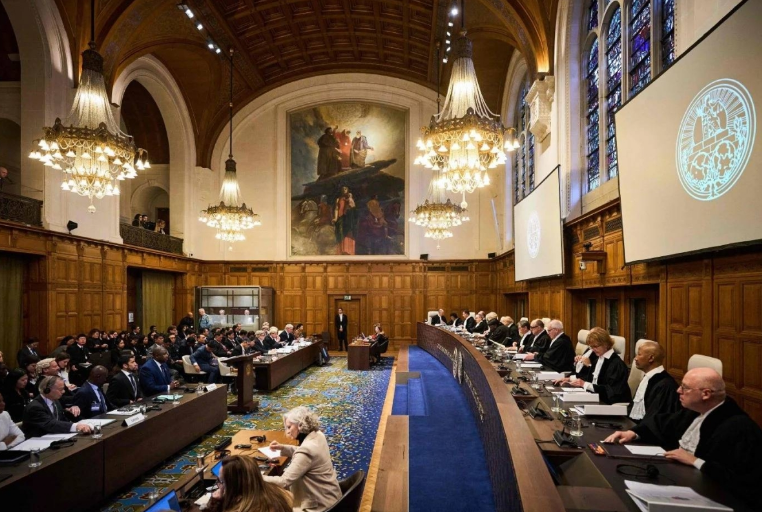
Myanmar deliberately targeted the Rohingya minority with extreme violence in an attempt to destroy the community, Gambia told the International Court of Justice on Monday as hearings in a landmark genocide case formally opened in The Hague.
Addressing the panel of judges, Gambia’s justice minister, Dawda Jallow, said the case was about the lived experiences of a persecuted people rather than abstract legal arguments. “The Rohingya of Myanmar have been targeted for destruction,” he said, accusing Myanmar’s authorities of carrying out a campaign aimed at eliminating the group.
The case centres on a 2017 military crackdown in western Myanmar that forced hundreds of thousands of Rohingya Muslims to flee into neighbouring Bangladesh. Survivors described mass killings, systematic sexual violence and widespread arson that reduced entire villages to ashes. Today, about 1.17 million Rohingya remain in overcrowded camps in Cox’s Bazar, one of the world’s largest refugee settlements.
Paul Reichler, a lawyer representing Gambia, outlined testimony from witnesses who reported gang rape, sexual mutilation and infants burned alive. He told the court the acts showed a clear pattern of intent that met the threshold for genocide under international law.
From the camps in Bangladesh, Rohingya refugees followed the proceedings closely. Janifa Begum, a 37-year-old mother of two, said she hoped the hearings would reflect the suffering endured by her community. “We want justice and peace,” she said.
Gambia, which filed the case in 2019, argues that Myanmar violated the 1948 Genocide Convention, which allows any signatory state to bring proceedings against another for alleged breaches. The ICJ, which settles disputes between states, cannot enforce its rulings, though a decision in Gambia’s favour would add significant diplomatic pressure on Myanmar.
Myanmar has consistently denied committing genocide, saying its military operations were aimed at Rohingya insurgents following attacks that killed security personnel. A spokesperson for the ruling junta could not be reached for comment during the opening day of hearings.
In 2020, the court ordered Myanmar to take all steps within its power to prevent acts prohibited under the Genocide Convention, including killings and actions intended to bring about the physical destruction of the group. Two years later, the United States formally declared that the violence against the Rohingya amounted to genocide.
Philippe Sands, also speaking for Gambia, told judges that when the evidence was viewed as a whole, it pointed to a consistent state policy driven by genocidal intent.
The hearings are due to conclude on January 29, though a final ruling may take years. Parallel investigations are also under way at the International Criminal Court and in Argentina under universal jurisdiction laws.
Outside the court, Tun Khin, president of the Burmese Rohingya Organisation UK, said the community had waited decades for accountability. “We want justice, the right to return home, and recognition of what was done to us,” he said.