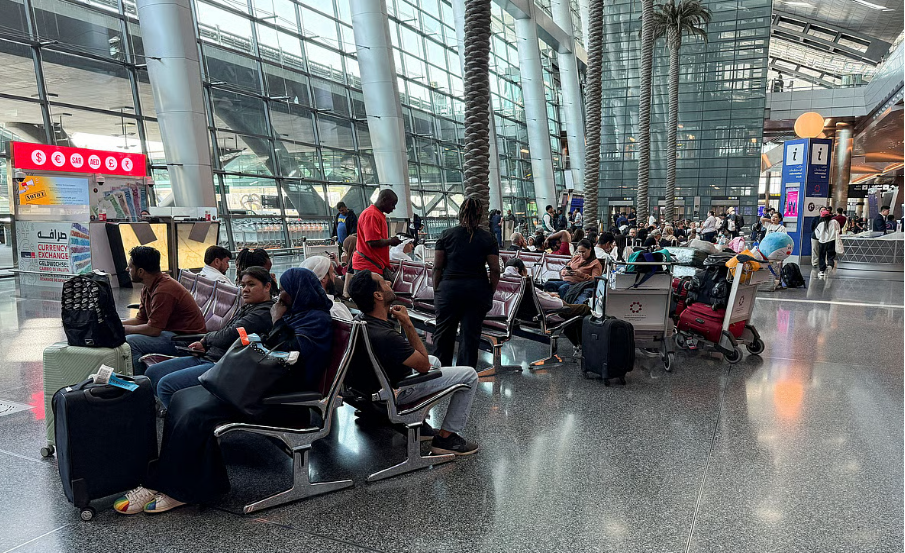
A widespread radio communication failure led to the temporary closure of Greece’s airspace on the morning of January 4, 2026, affecting several flights between the UAE, Gulf countries, and Europe. Airlines were forced to reroute flights, which added time to some journeys and may result in minor changes to airfares, analysts said.
Emirates reported that its flights to and from Athens were largely unaffected. “Despite the temporary closure of Greece airspace, Emirates operations have been minimally impacted. We continue to monitor developments closely. The safety of our passengers and crew remains our top priority,” a spokesperson said.
Greece airspace serves as a key corridor into Europe from the southeast, meaning most UAE and GCC carriers flying to European destinations could experience some disruption. According to Flightradar24, backup communication frequencies were deployed within a few hours to allow flights to resume, though the exact cause of the failure remains unclear. Officials suggested the issue could stem from technical problems, aging infrastructure, or, in rare cases, malicious activity.
Saj Ahmad, chief analyst at London-based StrategicAero Research, said that direct flights to Greece from the UAE and Gulf countries faced the most impact. “For northern and western European flights, airlines generally have alternative routes that avoid Greek airspace, which helps limit delays,” he explained.
Ahmad noted that carriers including Emirates, Qatar Airways, Etihad, Air Arabia, and flydubai, which operate services to Greece, were able to maintain most of their European schedules since their broader operations are not heavily reliant on Greek airspace.
Nevertheless, thousands of passengers and hundreds of flights were affected, particularly those travelling between the GCC and Europe during the busy pre-spring and pre-Ramadan period. Ahmad warned that airlines unable to quickly redeploy aircraft could adjust fares to offset operational costs. “If the disruption lasts beyond 12 to 24 hours, the number of affected flights, especially within the EU, could rise sharply, potentially hitting thousands,” he said.
The analyst highlighted the challenges caused by failing radio and telecommunications systems. Passengers could face further delays until full operations are restored, as flights that would normally cross Greek airspace were rerouted to minimize disruption.
Authorities and airlines continue to monitor the situation closely, ensuring that flights operate safely while adjustments are made to schedules. Most disruptions were short-lived, with services resuming within hours, but the incident underlined the vulnerability of key European air corridors to technical failures.