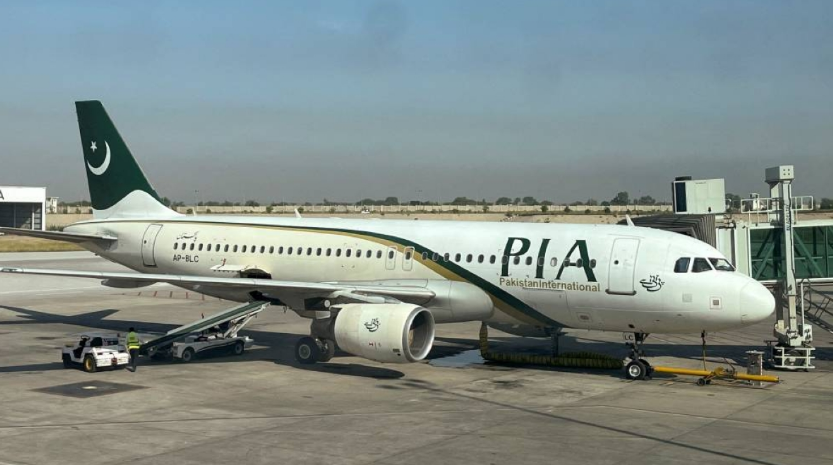
Pakistan received three bids in a televised auction for state carrier Pakistan International Airlines on Tuesday, as the government moves forward with a long-delayed reform demanded by the International Monetary Fund.
The auction marks the country’s second televised attempt to sell the once-storied flag carrier, following a failed process last year that attracted only a single bid well below the government’s reference price. That attempt would have been Pakistan’s first major privatisation in nearly two decades.
During Tuesday’s live broadcast, representatives from the bidding groups approached a transparent box one by one to deposit sealed offers, briefly fumbling as they pushed envelopes through the slot. Officials said bids for a majority stake in PIA will be collected in two phases, with a second open-bidding ceremony scheduled later in the day.
Prime Minister Shehbaz Sharif praised the transparency of the process, stating, “I am thankful to the ministers and head of the Privatisation Commission for making the process transparent,” and called on cabinet members to attend the second ceremony.
The bidders included a consortium led by Lucky Cement Limited, which also comprises power producer Hub Power Holdings Limited, Kohat Cement Company Limited, and investment firm Metro Ventures. A second consortium was headed by Arif Habib Corporation Limited, including fertiliser maker Fatima Fertiliser Company Limited, private school network City Schools, and real estate firm Lake City Holdings Limited. The third bidder was private airline Air Blue (Private) Ltd.
Under the transaction structure, the government is offering up to 100 percent of PIA, with any stake above 75 percent subject to a 15 percent premium, according to local media.
Last year, the government set a minimum price of $305 million for a 60 percent stake, but received a single $36 million bid from real estate developer Blue World City. The offer was withdrawn due to concerns over PIA’s finances and “significant leakages.” Several pre-qualified groups had cited uncertainties around policy continuity, unattractive terms, and doubts over the government’s long-term commitments, especially after Islamabad renegotiated sovereign-guaranteed power contracts.
Since then, PIA’s prospects have improved. The government has assumed most of the airline’s legacy debt, and the carrier posted its first pre-tax profit in two decades. Britain and the European Union lifted a five-year ban that had restricted PIA from its most profitable routes. Analysts and government officials have said reopening these routes could materially increase revenue and support a higher valuation than last year’s failed auction.
The sale of PIA is part of a broader privatisation effort under Pakistan’s IMF bailout program, which also targets stakes in state-owned banks, power distribution companies, and other loss-making enterprises. Officials hope the programme will reduce fiscal drain and restore investor confidence while modernising key sectors of the economy.