As malls in western countries of the world brace for an existential crisis, global capital is pivoting toward a market that seems to defy every global retail trend—India. While the United States has seen nearly 1,200 mall store closures since 2020, forcing almost 40 percent of vacant malls to undergo rezoning or repurposing, India is witnessing a retail resurgence driven by strong consumer demand and growing investor confidence.
Anuj Kejriwal, CEO of Retail Leasing and Industrial & Logistics at Anarock Group, said India is set to attract over $3.5 billion in capital inflows into malls over the next three years. “Over 88 foreign brands have entered the Indian market and are looking to expand aggressively. Several more global brands are seeking space in the limited Grade-A assets available,” he noted.
A key factor driving this growth is the severe undersupply of quality retail space in India. Tier 1 cities offer just 4 to 6 square feet of retail space per person, Tier 2 and 3 cities have 2 to 3 square feet, and Grade-A mall space alone accounts for only 0.6 square feet per capita. By comparison, the U.S. averages 23 square feet per person, and China exceeds 6 square feet. “This gap, combined with India’s per-capita income nearly doubling in the last decade, has created a demand–supply mismatch virtually unheard of in global retail,” Kejriwal said. Grade-A malls are reporting near-full occupancy of 95 to 100 percent, with long waiting lists for premium locations. Rental growth has consistently surpassed pre-pandemic levels, and leasing cycles are outpacing construction cycles—a rare phenomenon globally.
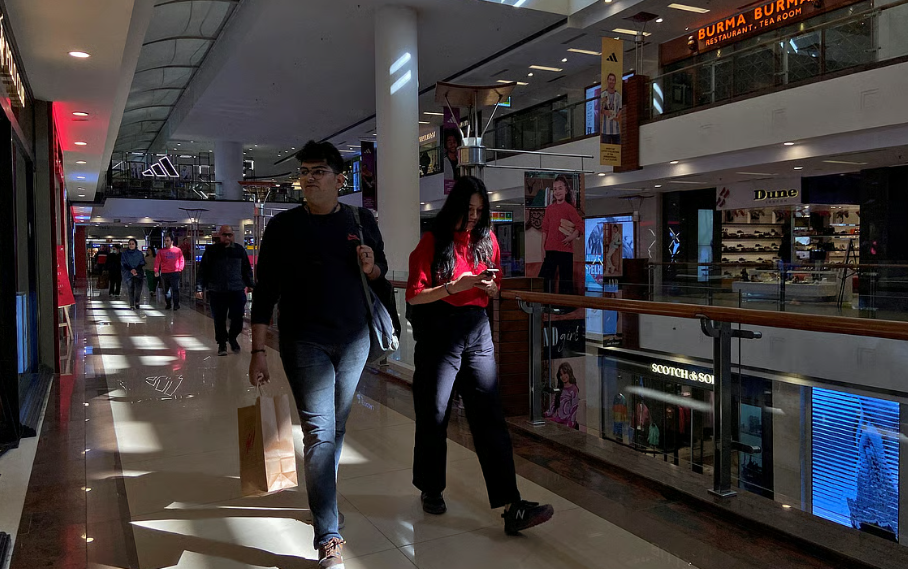
India’s malls are also benefiting from a consumption-driven economy. With the country on track to become a $6 trillion consumption market by 2030, malls have evolved into lifestyle destinations anchored by entertainment, dining, and social experiences. Daily footfalls in major malls exceed 20,000 on weekdays and surge beyond 40,000 on weekends, with food and entertainment contributing 30 to 35 percent of visits. This mix has helped malls remain largely resilient to online retail disruptions.
Investor interest has sharpened as India now hosts over 600 operational malls, though fewer than 100 meet institutional standards. Blackstone’s Nexus Select Trust Reit, with 19 malls housing over 1,000 brands and generating Rs 1.6 billion in annual net operating income, launched retail-led Reits in India in 2023, establishing the sector’s credibility. Analysts expect at least two more retail Reits to enter the market by 2030.
India’s e-commerce penetration remains low at around 8 percent, ensuring that physical retail continues to play a central role. Many direct-to-consumer brands report offline store conversions two to three times higher than online. Grade-A malls in India deliver 14 to 18 percent internal rates of return, nearly double those in many Western markets, with low vacancies and revenue-sharing arrangements linked to consumption growth providing long-term stability.
Kejriwal summed up the contrast: “In the U.S. and Europe, malls face oversupply, declining footfalls, online cannibalization, and repurposing pressures. In India, limited quality supply, rising incomes, heavy footfalls, and rapid brand expansion are driving unprecedented growth. Retail leasing rose almost 70 percent year-on-year in the first half of 2025, with new mall supply growing over 160 percent.”