Pakistan announced on Friday that it had arrested four members of a militant cell in connection with Tuesday’s suicide bombing outside court buildings in Islamabad. The government said the operation was orchestrated by the Tehreek-e-Taliban Pakistan (TTP), a faction of the Pakistani Taliban, and that the attack was guided by leaders based in Afghanistan.
“The network was handled and guided at every step by the… high command based in Afghanistan,” the government statement said. The arrested individuals include the alleged commander of the cell and three other members. Authorities identified the suicide bomber as Usman, also known as Qari, a resident of Nangarhar province in eastern Afghanistan. Investigations are ongoing, with officials warning that further arrests and revelations are expected. The government did not specify where the arrests were made.
Interior Minister Mohsin Naqvi told the Senate on Thursday that the bomber was Afghan. He highlighted a broader security concern, citing that Afghan nationals were also involved in a separate assault this week on Cadet College Wana, a military-affiliated school in northwest Pakistan.
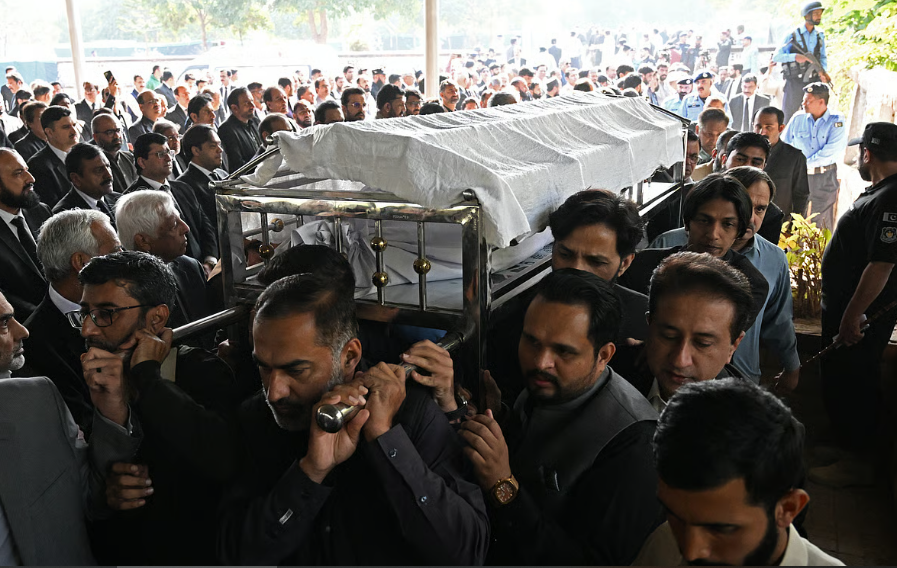
The Islamabad bombing killed 12 people and injured dozens. The city has largely avoided major militant attacks in recent years, with the previous suicide attack occurring in December 2022. Officials have linked the recent resurgence of violence to armed groups reportedly sheltering on Afghan soil.
Prime Minister Shehbaz Sharif described the Islamabad attack in parliament on Wednesday as a “horrific act of terrorism.” He urged cooperation from Afghanistan, saying, “We want peace. We want Afghanistan to agree and be a partner in peace. We believe what’s good for Pakistan is good for them… but we cannot believe lies and not rein in terrorists.”
The Taliban government in Kabul has not responded to Pakistan’s allegations directly, though it has expressed “deep sorrow & condemnation” over both attacks. Relations between Islamabad and Kabul have deteriorated sharply in recent months. A series of cross-border clashes last month killed more than 70 people, including dozens of Afghan civilians, according to the United Nations. Although the two countries agreed to a fragile ceasefire, negotiations failed to finalise details, with each side blaming the other for delays.
Security analysts warn that this week’s attacks could spark renewed hostilities between the two neighbors. Pakistani authorities are continuing investigations into the Islamabad bombing while maintaining a focus on cross-border militant networks.
The TTP has previously carried out high-profile attacks across Pakistan, and this latest incident underscores ongoing security challenges and the complexities of regional counterterrorism efforts. The arrests signal Islamabad’s intent to hold the group accountable while seeking broader cooperation to prevent future attacks.