Qatar has unveiled comprehensive frameworks aimed at increasing the digital economy’s contribution to its non-hydrocarbon GDP by more than QR40 billion by 2030, as part of its ongoing transition toward a knowledge-based economy.
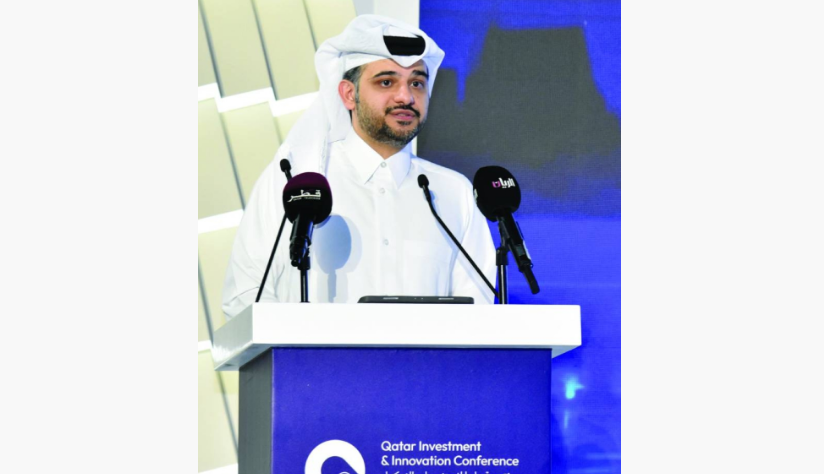
Speaking at the second edition of the Qatar Investment and Innovation Conference, Faraj Abdulla, Director of Digital Economy at the Ministry of Communications and Information Technology (MCIT), said the country’s strategy aligns with the Qatar National Vision 2030, which seeks to move the nation from a resource-dependent model to one driven by technology, talent, and entrepreneurship.
Abdulla said the digital transformation roadmap also aims to create 26,000 jobs in the information and communications technology (ICT) sector and increase research and development spending to 1.5% of GDP by 2030. “Guided by Qatar National Vision 2030, we are advancing from a resource-based model to a knowledge-driven economy powered by talent, entrepreneurship, and technology,” he said.
The MCIT official highlighted strong momentum in the country’s innovation ecosystem, noting that investments in Qatar’s digital and technology sectors surged by more than 130% in 2024, underscoring growing investor confidence. He also cited $2.7 billion in foreign direct investment (FDI) recorded that year as evidence of Qatar’s position as a key regional investment hub.
Outlining the ministry’s priorities, Abdulla said Qatar is investing heavily in advanced digital infrastructure and human capital through initiatives such as the Digital Incubation Centre, Tesmo Accelerator, ScaleNow, and the National Innovation Labs. These programmes, he explained, offer entrepreneurs end-to-end support to develop and scale technology ventures.
“Our investments in 5G, cloud computing, and AI sandboxes ensure innovators have the tools they need to succeed,” Abdulla added.
Qatar is also establishing a regulatory environment to ensure artificial intelligence is developed responsibly. Through a strategic partnership with ScaleAI, MCIT is shaping policies that encourage innovation while safeguarding ethical standards in AI use. “We are balancing innovation with responsibility,” Abdulla said.
The country is partnering with global technology leaders such as Microsoft and Google Cloud to accelerate AI adoption across sectors. Abdulla pointed to a recent example from the Ministry of Municipality, where an AI-powered building permit system has cut approval times from 30 days to just two hours — a sign of how digital tools are streamlining governance.
“As we progress toward 2030, Qatar will continue investing in technology that improves lives, attract talent, and foster partnerships that create shared prosperity across the GCC,” Abdulla said. “Qatar is committed to being more than a national success story — it aims to be a regional leader in digital innovation.”