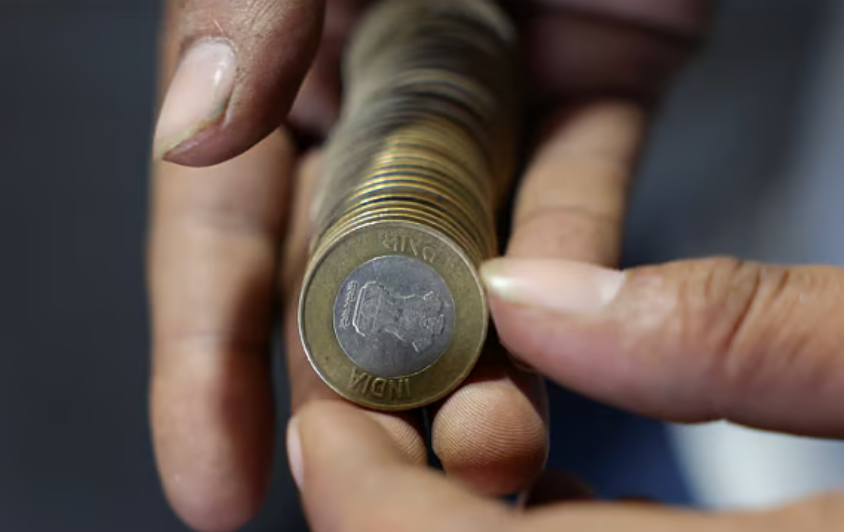
The Indian rupee held close to its record low on Wednesday, as persistent concerns over steep U.S. tariffs and potential changes in American visa policies kept pressure on the currency. Intervention by the Reserve Bank of India (RBI) offered some support, but traders warned the rupee remained vulnerable.
The local currency was last seen nearly flat at 88.7425 against the U.S. dollar, just shy of its all-time low of 88.7975 touched on Monday. Market participants said the rupee appeared poised to weaken further at the open, with levels around 88.85 expected. However, suspected central bank activity in both the non-deliverable forwards and onshore spot markets helped steady the exchange rate.
“There are persistent dollar bids from importers and foreign banks, so the direction of travel for the rupee appears to be lower,” said a trader at a state-run bank. “The extent of the fall will depend on how much the RBI is willing to allow.”
Equity markets also reflected investor caution. The benchmark Sensex and Nifty 50 indexes were each down about 0.4% during the session, while a gauge of information technology stocks slid nearly 1%. Analysts said investors were particularly anxious about how a sharp increase in U.S. H-1B visa fees could disrupt Indian IT firms, which rely heavily on overseas staff placements for their revenue models.
Foreign investor outflows have further pressured Indian markets. Overseas investors have withdrawn a net $1 billion from domestic equities so far in September, bringing total outflows for 2025 to nearly $16 billion. Market analysts noted that such persistent selling has compounded the rupee’s weakness and weighed on overall sentiment.
The RBI is widely believed to have stepped in earlier this week to stem volatility, according to traders. Intervention has been a key feature of the central bank’s strategy as it seeks to prevent sharp swings in the currency, though officials have avoided confirming such activity publicly.
Adding to the rupee’s challenges was a modest strengthening of the U.S. dollar, which weighed broadly on Asian currencies. Regional peers also slipped slightly, underlining the wider pressure across emerging markets.
“Despite brief dips in the dollar’s strength, persistent market pressures have kept the local currency under strain, reflecting a challenging mix of global developments,” said Amit Pabari, managing director at FX advisory firm CR Forex.
Analysts say the rupee’s near-term outlook will hinge on the RBI’s willingness to defend key levels and on how U.S. trade and immigration policies evolve in the coming weeks. Without stronger inflows or a shift in global sentiment, many traders believe the rupee could retest record lows.