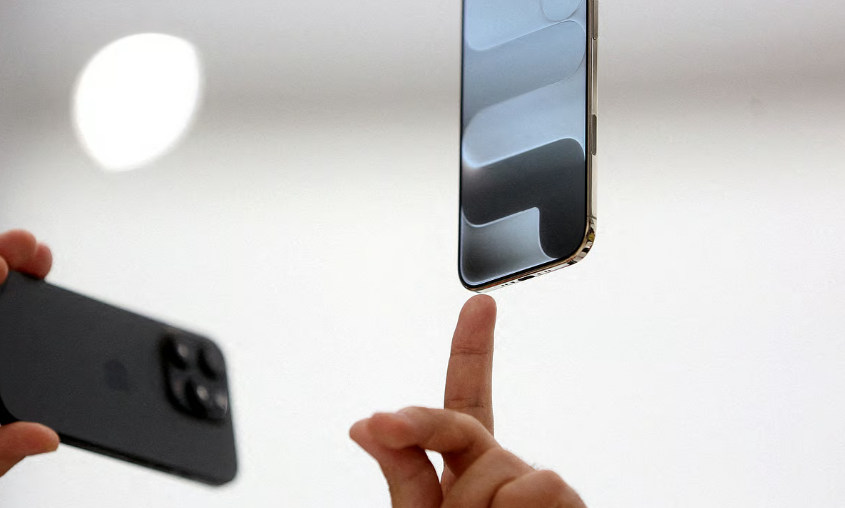
Apple CEO Tim Cook introduced the company’s latest innovation on Tuesday with the unveiling of the iPhone Air, the slimmest iPhone ever made and the most significant redesign in nearly a decade. The launch, held at Apple’s Cupertino headquarters, marked a pivotal moment for the tech giant as it seeks to reinvigorate its smartphone lineup, which many analysts had considered stagnant in recent years.
Cook opened the event with a quote from Apple’s late co-founder Steve Jobs: “For us, design goes beyond just how something looks or feels. Design is also how it works.” The nod to Jobs recalled the company’s tradition of groundbreaking design, notably when Jobs introduced the MacBook Air in 2008 by pulling it from a manila envelope.
At just 5.6 millimeters thick, the iPhone Air is slimmer than Samsung’s Galaxy S25 Edge and incorporates advanced hardware engineering. Apple has reduced its internal circuitry to the size of a few postage stamps, making room for what the company claims is “all-day battery life.” Powered by the new A19 Pro chip, optimized for artificial intelligence tasks, the device also features two custom communication chips for faster connectivity.
Despite pre-launch skepticism, the reception was warmer than expected. Alongside the iPhone Air, Apple unveiled three other models — the iPhone 17, 17 Pro, and 17 Pro Max — designed to appeal to a range of budgets. Early hands-on reactions praised the Air’s titanium frame and “ceramic shield” glass, which Apple says enhance durability. Popular tech reviewer Gaurav Chaudhary, known as “Technical Guruji,” said the device lived up to the hype even after months of leaks, though he cautioned that battery performance remains to be tested.
Analysts noted that the Air brings a welcome sense of differentiation in a market saturated with similar-looking smartphones. Paolo Pescatore of PP Foresight said the device “reinvigorates the whole segment of iPhone.” Still, compromises were evident: the iPhone Air includes only one rear camera, compared with two on the base iPhone 17 and three on the Pro models.
The new release comes at a critical time for Apple, particularly in China, where it faces stiff competition from slimmer and more affordable rivals. Will Wong, senior analyst at IDC, warned that trade-offs in cameras, audio, and battery performance could limit the Air’s appeal. However, its price — positioned in the mid-range of Apple’s lineup and $100 cheaper than Samsung’s Galaxy S25 Edge — may boost sales.
Nabila Popal, senior research director at IDC, predicted strong demand for the Air, noting it effectively replaces the iPhone Plus, which previously accounted for up to 7% of Apple’s shipments. “Apple’s late, but when they do it, they do it bigger, louder, or better than anyone,” she said.
As Apple heads into the holiday season, the iPhone Air could be the fresh momentum the company needs to reassert its leadership in the global smartphone market.