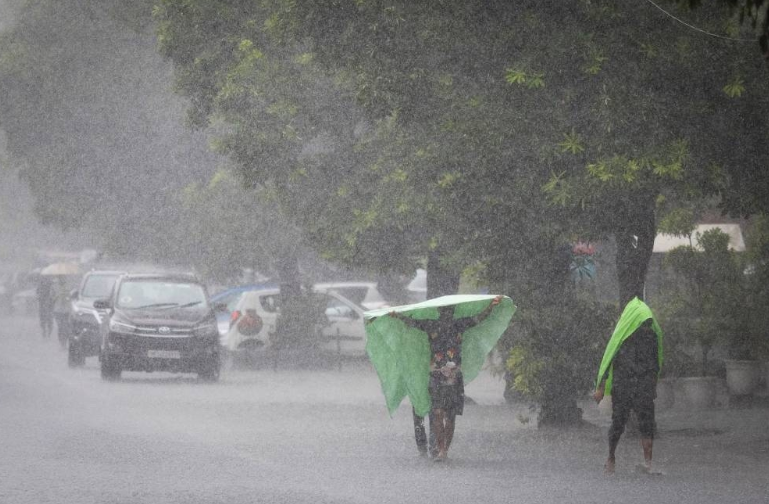
India is set to receive above-average monsoon rainfall in September, following a wetter-than-usual August, the India Meteorological Department (IMD) announced on Sunday. The state-run agency said that September rains are likely to reach 109% of the long-term average, marking a strong end to the country’s four-month monsoon season.
The forecast comes after India recorded rainfall 5% higher than normal in August. While rains are critical for the world’s most populous nation, excess precipitation could pose risks to summer-sown crops such as rice, cotton, soybean, corn, and pulses. These crops, planted with the onset of monsoon in June, are usually harvested starting mid-September. Prolonged or heavier showers at this stage could damage yields and affect market supplies.
According to the IMD, nearly all parts of the country are expected to see above-normal rainfall in September, except for the northeastern states and the southern states of Tamil Nadu and Kerala, which will likely remain drier. The projections are based on the 50-year rainfall average, which serves as the benchmark for seasonal assessments.
The monsoon, which runs from June through September, plays a pivotal role in India’s economy, valued at nearly $4 trillion. It delivers nearly 70% of the rainfall needed to sustain agriculture, recharge groundwater, and fill reservoirs. Despite rapid urbanization and the expansion of irrigation facilities, almost half of India’s farmland still relies directly on monsoon rains for crop growth.
Agricultural economists warn that while good rainfall boosts rural incomes and supports food production, excessive showers can trigger crop losses and disrupt supply chains. Any large-scale damage to rice or pulses, key staples in the Indian diet, could also stoke food inflation at a time when consumers are already grappling with high prices of vegetables and edible oils.
This year’s rainfall pattern has drawn particular attention, as uneven distribution in June and July had earlier raised concerns about crop planting delays. A stronger spell in August helped bridge the gap, but the looming September deluge has now shifted focus to potential flooding and crop damage.
As the monsoon enters its final month, policymakers, farmers, and traders will be closely monitoring rainfall intensity and its impact on harvesting. The outcome could influence not only agricultural output but also inflation trends and rural demand in Asia’s third-largest economy.