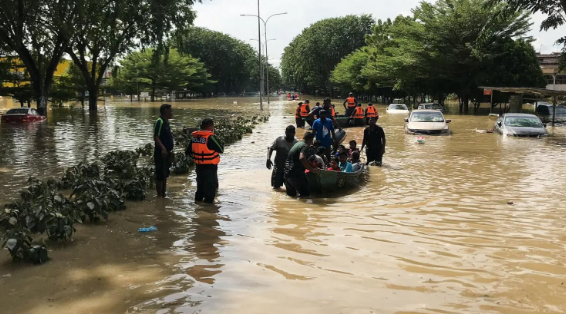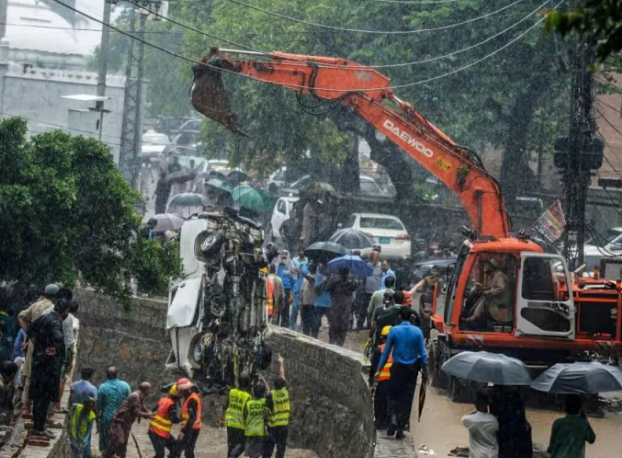
The death toll from devastating monsoon rains and flash floods that have battered Pakistan since June 26 has climbed to 291, with nearly 700 others injured, according to the latest update from the Pakistan Disaster Management Authority (PDMA).
In a statement released Thursday, the PDMA said that 698 people have been injured and 826 homes damaged across the country as a result of the persistent heavy rainfall and flooding. Among the deceased are 102 men, 51 women, and 138 children.
The statement also highlighted that rescue and relief efforts remain underway in the worst-affected regions, with the PDMA working closely with provincial governments and emergency services to provide assistance to affected communities.
“Relief operations are in full swing,” the PDMA said. “We are coordinating with relevant authorities in each province to ensure timely support reaches those impacted.”
The seasonal monsoon, which typically runs from June to September, has brought intense rainfall this year, triggering flash floods in urban and rural areas and displacing hundreds of families. Provinces including Punjab, Sindh, and Khyber Pakhtunkhwa have reported the highest levels of damage.
Pakistan, a country of over 240 million people, continues to bear the brunt of climate-related disasters, despite contributing less than 1% to global greenhouse gas emissions. Experts warn that climate change is intensifying the monsoon cycle, making rainfall more erratic and severe.
The ongoing rains are raising fears of further devastation in the coming weeks, as meteorological officials warn that more downpours are expected in parts of the country through early August.
Environmental and humanitarian agencies have renewed calls for greater investment in climate resilience and infrastructure improvements, particularly in flood-prone areas where communities remain vulnerable.
Pakistan has experienced some of its worst climate disasters in recent years. In 2022, catastrophic flooding submerged a third of the country, affecting more than 30 million people and causing damages worth over $30 billion.
As the country braces for continued rainfall, authorities have urged citizens in vulnerable regions to take precautionary measures and stay updated on weather advisories. Emergency shelters have been established in several districts, while medical teams and relief supplies are being dispatched to flood-hit zones.
The government has called for national solidarity and international support to cope with the mounting humanitarian needs, as the full scale of the damage is still being assessed.