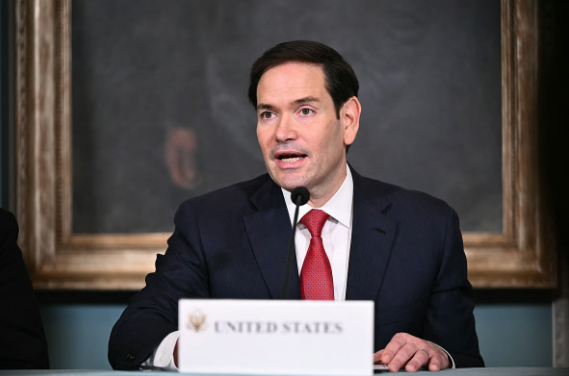
U.S. Secretary of State Marco Rubio has urged Iran to fulfill its international obligations to protect personnel from the International Atomic Energy Agency (IAEA), following reports of alarming threats directed at the agency’s leadership.
In a statement posted on social media platform X, Rubio strongly condemned calls allegedly emerging from within Iran for the arrest and execution of IAEA Director General Rafael Grossi. “Calls in Iran for the arrest and execution of IAEA Director General Grossi are unacceptable and should be condemned,” Rubio stated.
He reaffirmed the United States’ continued support for the IAEA’s mission to monitor Iran’s nuclear activities, praising both Grossi and the agency for their “dedication and professionalism.” Rubio added, “We continue to support the IAEA’s vital monitoring mission in Iran and urge Iranian authorities to guarantee the safety of all IAEA personnel.”
The warning comes at a time of heightened tensions in the region. Earlier this week, Iran’s Supreme Leader Ayatollah Ali Khamenei delivered a fiery address, declaring that Iran had “slapped America in the face” with a missile strike on a U.S. military installation in Qatar. The strike was reportedly in retaliation for recent U.S. attacks on Iranian nuclear sites located in Fordow, Isfahan, and Natanz.
While Iran has not officially commented on the alleged threats against Grossi, growing anti-IAEA sentiment has been visible in some Iranian media and online forums, particularly after the agency expressed concerns over a lack of transparency in Iran’s nuclear program.
The IAEA has long played a central role in monitoring Iran’s compliance with international nuclear agreements, including the now-defunct 2015 Joint Comprehensive Plan of Action (JCPOA), from which the U.S. withdrew in 2018. Since then, efforts to revive the accord have repeatedly stalled amid escalating geopolitical friction.
Rubio’s comments underscore Washington’s unease over both the security of international monitors and the broader trajectory of Iran’s nuclear ambitions. The U.S. has warned that any move by Tehran to obstruct or intimidate international inspectors would further isolate the country diplomatically and could trigger new rounds of sanctions.
As diplomatic channels remain strained and the security situation in the Gulf deteriorates, observers warn that the latest threats could further undermine the already fragile framework of international nuclear oversight in the region.